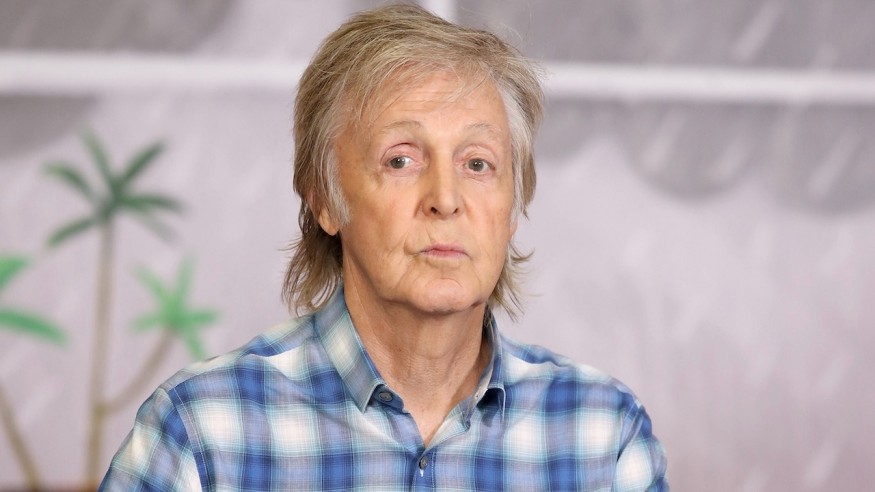
Paul McCartney’s fortune has climbed above $1.4 billion, making him the third-richest musician in the world, according to Forbes. The former Beatle now sits behind only Jay-Z and Taylor Swift in the publication’s latest estimates. His wealth reflects decades of record sales and touring, but also a long-term publishing strategy built around acquiring valuable song rights and music catalogs.
Paul McCartney is officially a billionaire, with Forbes estimating his net worth at more than $1.4 billion. That figure places the former Beatle third among the world’s richest musicians, behind Jay-Z at an estimated $2.8 billion and Taylor Swift at $2 billion.
The ranking reflects far more than McCartney’s own recordings. While his career with The Beatles, Wings and as a solo artist has generated enormous revenue, a substantial part of his wealth has come from music publishing and rights ownership.
McCartney’s understanding of that side of the business developed partly through difficult early experience. The Beatles became one of the most commercially successful groups in music history, but the band’s first contracts left its members with far less control over their work and earnings than their later influence might suggest.
That experience helped shape the way McCartney approached publishing. He eventually created MPL Communications, a company that allowed him to acquire rights to music outside his own catalog rather than relying only on royalties from songs he had written or recorded himself.
Over the years, MPL built a substantial portfolio. Its holdings include rights connected to long-running standards such as “Baby, It’s Cold Outside,” “Blue Christmas” and “Blue Suede Shoes,” along with music from major stage productions including “Grease.”
Those songs continue to generate income through performances, recordings, licensing and other uses. Christmas standards are particularly valuable because they return to radio, streaming services and commercial campaigns every year, creating recurring revenue decades after their original release.
McCartney also spent years addressing the complicated ownership history of The Beatles catalog. After legal action and negotiations, he reached a settlement with Sony/ATV in 2017 concerning rights connected to songs he wrote with John Lennon, giving him greater control over parts of the catalog under U.S. copyright law.
His finances have also been strengthened by an unusually durable touring career. Billboard Boxscore reported in 2022 that McCartney’s career concert grosses had passed $1 billion, putting him at the time among only a small group of artists to reach that level.
That live business has continued decades after The Beatles stopped touring. McCartney has repeatedly played arenas and stadiums around the world, drawing audiences made up of longtime fans as well as younger listeners who discovered the catalog generations after its original release.
The commercial strength of that music remains difficult to overstate. The Beatles still hold the record for the most No. 1 singles in Billboard Hot 100 history, with 20 songs reaching the top of the chart.
McCartney added another nine Hot 100 No. 1s through his solo work and Wings, the group he formed in 1971 after The Beatles had broken up. That gives his songwriting and performing career a chart history stretching across several distinct eras.
The same pattern appears on the Billboard 200. The Beatles accumulated 19 No. 1 albums in the United States, while McCartney reached the top another eight times through solo releases and records with Wings.
Those figures explain part of the scale of his fortune, but the publishing investments are what distinguish his financial story from a simple account of album sales and touring.
Instead of relying entirely on the continuing popularity of his own work, McCartney used the income generated by his career to acquire music that could produce royalties independently of his personal catalog. That approach turned publishing into a separate long-term asset.
Forbes’ latest estimate also places him in a very small group of musicians whose personal fortunes have moved well beyond the billion-dollar mark. Jay-Z remains at the top of the publication’s ranking with a business portfolio that extends far beyond music, while Taylor Swift’s wealth has been driven heavily by touring, recordings and ownership of her catalog.
McCartney’s route has been different. His fortune combines more than six decades of music income with publishing acquisitions, touring revenue and rights management developed over much of his adult life.
At 84, he is still an active performer rather than an artist whose wealth is based entirely on historical royalties. His recent touring continues to add to career totals that had already crossed the billion-dollar gross mark several years ago.
The Forbes estimate of more than $1.4 billion now puts a new number on that career. For Paul McCartney, the financial value of the music extends beyond The Beatles songs he helped write: it also includes the publishing catalog he spent decades building around them.