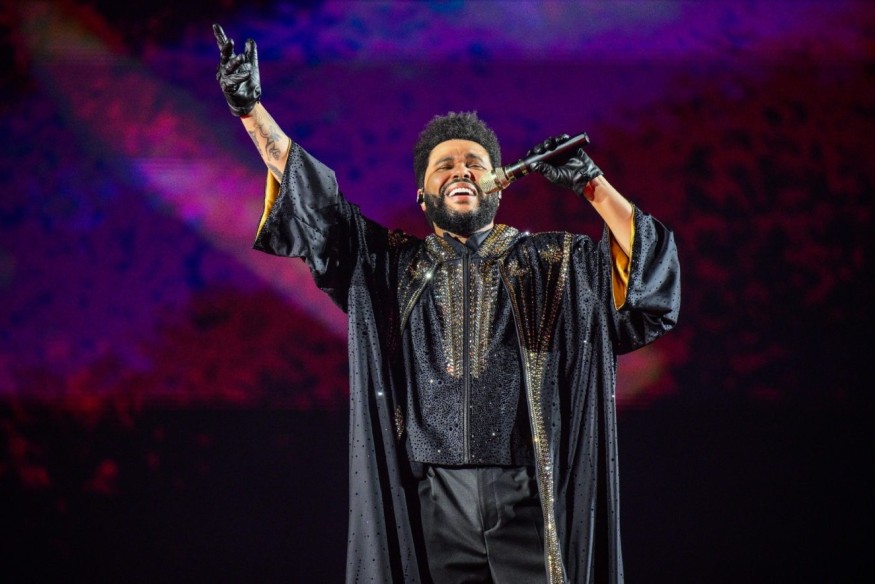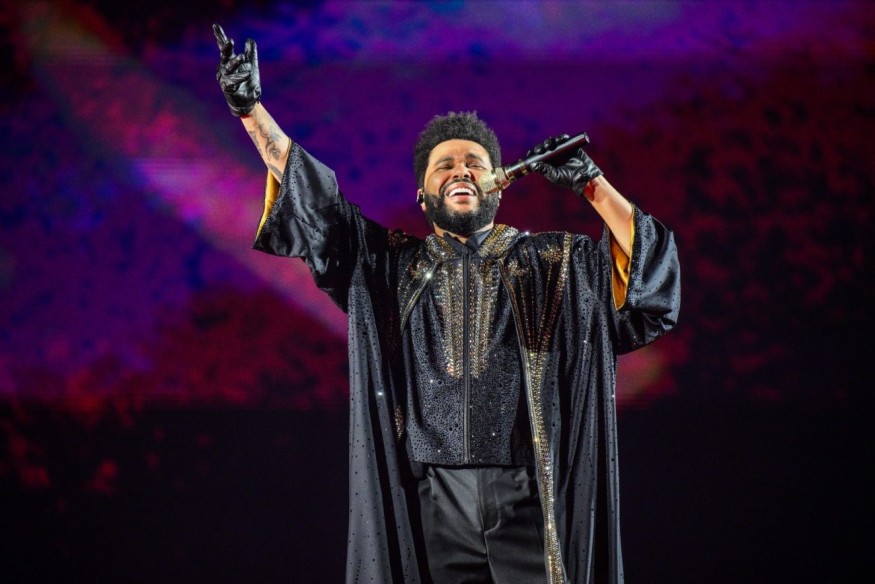
The Weeknd’s first night at Wembley Stadium ended with a huge fireworks display, but the timing immediately drew attention. Just hours earlier, the UK government had sent an emergency wildfire warning telling people to avoid activities that could start fires, including fireworks. Wembley later said the display went ahead only after discussions with the Metropolitan Police and London Fire Brigade confirmed it could be carried out safely.
The controversy surrounding The Weeknd’s first Wembley Stadium show was never really about him as an artist. On Friday, August 14, the opening night of his five-show London run ended with “Moth To A Flame” and a large fireworks display above the stadium. Under normal circumstances, it would have been another spectacular stadium-tour finale. On that particular day, however, the timing gave the moment a completely different meaning.
Only a few hours earlier, millions of people across England and Wales had received an emergency government alert warning of a serious wildfire risk. The message asked residents, landowners and visitors to avoid anything that could start a fire. Disposable barbecues, fire pits, burning waste and fireworks were all specifically mentioned.
The warning was unusually direct. Authorities explained that even a small flame could spread quickly in the dry conditions and put people, homes, businesses and emergency services at risk. So when fireworks filled the sky above Wembley later that evening, questions were almost inevitable.
The first reaction came online. Some concertgoers and social media users asked how one of the country’s largest stadiums could continue with a fireworks display after the government had just sent an emergency alert explicitly mentioning fireworks as a potential danger. Visually, the contradiction was difficult to ignore.
On one side, members of the public were being asked to avoid activities that would normally seem relatively ordinary. On the other, a national stadium was ending a concert in front of tens of thousands of people with controlled explosions and flames in the sky.
That image made for a simple argument. The reality behind the decision was more complicated.
Wembley said it had not ignored the government warning. According to a stadium representative, officials held discussions after receiving the alert with members of the Metropolitan Police and London Fire Brigade who were already present at the venue. Following that assessment, the decision was made that the planned fireworks display could safely go ahead.
The stadium also stressed that the show was professionally managed, carefully controlled and contained within the Wembley site. Specialist teams were responsible for the pyrotechnics, and dedicated fire-safety personnel were present during the event.
That distinction sits at the center of the debate.
The government message was public safety guidance rather than a blanket legal ban on every use of fireworks across the country. Authorities had introduced a temporary restriction on the sale of disposable barbecues, but there was no equivalent nationwide ban on professional fireworks displays.
From an operational and legal perspective, a planned stadium show run by trained professionals was therefore not treated in the same way as someone setting off fireworks in a garden, field or other uncontrolled outdoor space.
That does not make the public criticism meaningless.
Emergency alerts work partly because they communicate danger in very simple terms. When millions of people receive a message telling them not to use fireworks, most will not immediately begin thinking about the technical difference between domestic fireworks and a professionally managed stadium display.
The public sees a warning saying “avoid fireworks” and then, hours later, sees fireworks above Wembley.
That creates a powerful visual contradiction even if the safety situations are not actually equivalent.
It also shows how difficult emergency communication can become when official advice is broad enough to reach an entire population. Simple instructions are useful because people need to understand them quickly. But those same simple instructions can create confusion when large organizations are allowed to continue activities that appear, from the outside, to be exactly what the public has been asked to avoid.
Wembley’s response was clearly aimed at that perception. The stadium explained that its pyrotechnic systems are designed, operated and monitored by specialists and that fire-safety teams are part of its event planning. The argument was not that fireworks carry no risk. It was that the specific risk had been assessed and judged manageable under professional conditions.
The Weeknd’s concert therefore ended up at the center of a conversation that had very little to do with the music itself.
The Wembley dates are part of the “After Hours Til Dawn Tour,” a production operating on one of the largest scales in contemporary live music. The tour has passed the $1 billion mark in gross revenue and become the highest-grossing tour by a male solo artist. At that level, pyrotechnics are not improvised additions introduced moments before the final song.
They are part of a heavily planned technical sequence involving permits, specialists, fixed launch locations, safety zones and coordination between the venue, production staff and emergency services.
That is why placing personal responsibility on The Weeknd would oversimplify what happened.
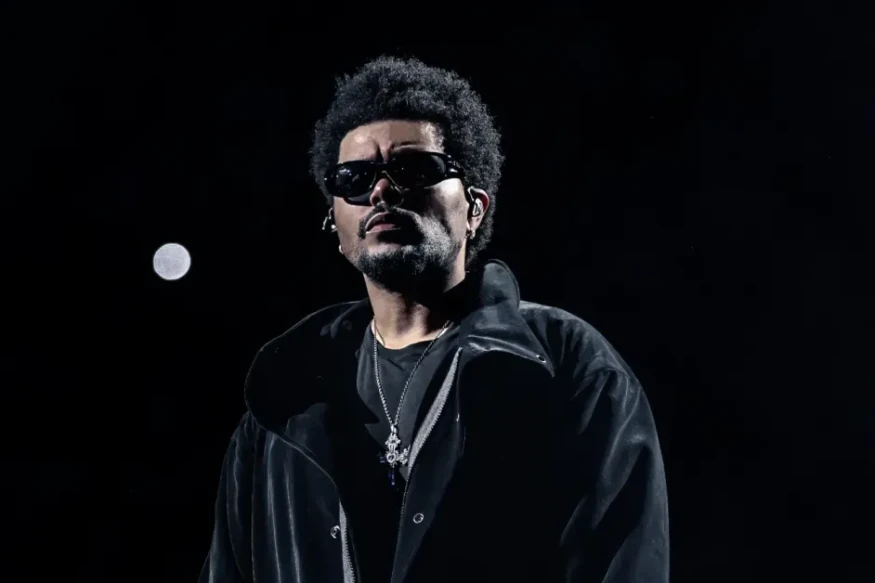
A performer may be the face of the concert, but the decision over whether a pyrotechnic sequence can safely operate on a particular day belongs to the production, venue management and relevant safety authorities. The key question was not whether Abel Tesfaye personally decided he wanted fireworks despite a government warning. It was whether Wembley and its safety partners correctly assessed the conditions after that warning was issued.
There is also a broader distinction between actual risk and perceived risk.
A firework launched in dry countryside without trained safety staff, controlled boundaries or emergency support is clearly different from a fixed professional system operating inside a major stadium. But when conditions are serious enough for a national emergency alert, the public will naturally expect every visible use of fire or pyrotechnics to face increased scrutiny.
That makes the decision to continue understandable from one perspective and controversial from another.
The same emergency alert had already created one of the summer’s stranger festival moments at Boomtown, where thousands of phones began sounding the government warning at almost exactly the same time. Videos quickly spread online showing festivalgoers initially reacting with laughter and cheers as the alert interrupted the atmosphere.
The moment illustrated how suddenly an official warning can enter a space built entirely around entertainment. A crowd can be dancing or watching a show and, within seconds, everyone is reminded that something more serious is happening outside the event.
At Wembley, the warning had a different effect. It did not stop the concert, and it did not lead to the fireworks finale being canceled. Instead, it triggered another round of safety discussions and then forced the venue to explain publicly why the show had been allowed to continue.
That detail is important.
The fireworks were not used because the warning had been missed or dismissed. According to Wembley, the alert prompted a new assessment involving police and fire officials. The display then proceeded because the specific stadium conditions were judged different from the situations the public warning was mainly trying to prevent.
That explanation may satisfy people focused on procedure, but it does not completely remove the communications problem.
Public trust depends partly on consistency. If people are asked to change their own behavior because the fire risk is serious, they may reasonably expect large organizations to demonstrate even greater caution. When those organizations appear to make exceptions for themselves, even professionally justified decisions can look like double standards.
That is the most interesting part of the Wembley controversy.
The debate is not simply about whether the fireworks were legally allowed or technically safe. It is about how safety decisions look to the wider public when official advice is being delivered at national scale.
In a controlled environment, Wembley may have been able to reduce the risk to an acceptable level. But the image of fireworks exploding above the stadium only hours after an alert warning against fireworks was always going to travel faster than a detailed explanation about professional pyrotechnic protocols.
Modern stadium shows live inside that tension. Fans expect increasingly spectacular productions, and pyrotechnics have become a standard part of major pop and rock tours. At the same time, extreme weather and changing environmental conditions mean those effects cannot always be treated as routine.
What was safe and unremarkable on one night may require a completely different decision the next.
The Weeknd continued his Wembley run with another show on August 15, followed by concerts on August 16, 18 and 19. The performances remain part of an enormous global tour, and Tesfaye has also recently suggested that his earlier plan to eventually leave The Weeknd name behind may no longer feel right.
The conversation from the first London night, however, is likely to survive separately from the music.
It exposed the difficult line between government warnings, professional risk management and public perception. Wembley maintains that it consulted the appropriate authorities and had the systems necessary to run the display safely. The criticism shows that safety is not judged only through technical procedures once a national warning becomes part of the story.
Sometimes the event itself may be controlled, while the message around it is much harder to control.
That is exactly what happened at Wembley. The fireworks went ahead after a professional assessment. But when millions of people had just been told to avoid them, even a carefully managed stadium display was never going to pass without questions.