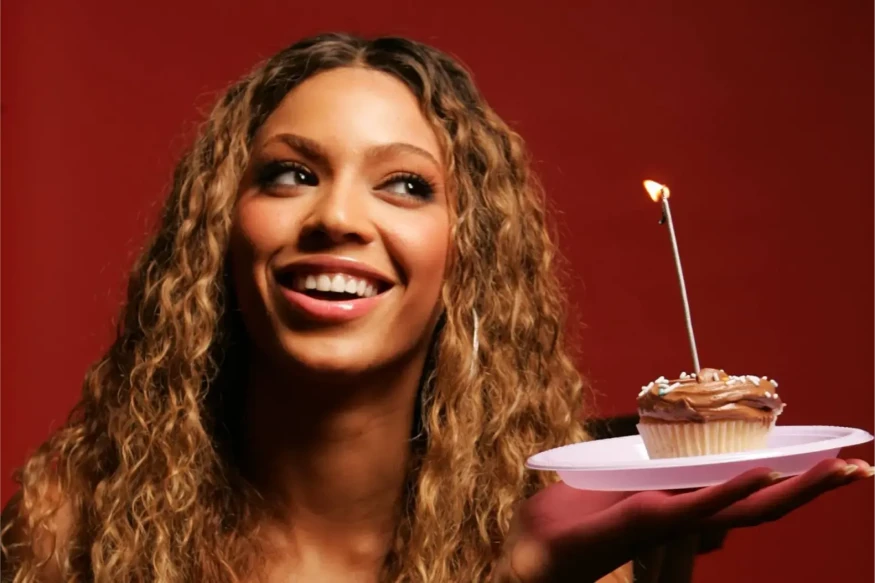
Beyoncé is celebrating the 20th anniversary of B’Day with an expanded 31-track digital edition that brings together unreleased songs, B-sides, Spanish-language material, new collaborations and restored 4K videos. At the center is “Irreemplazable (Como La Flor),” a posthumous Selena Quintanilla collaboration, alongside a new Maluma track and a Celia Cruz sample that add a strong Latin connection to the anniversary release.
Beyoncé is celebrating the 20th anniversary of B’Day by reopening one of the most energetic chapters of her early solo career with a much bigger digital edition. Released on September 4, exactly two decades after the original era and on her 45th birthday, the B’Day 20th Anniversary Deluxe Edition expands the album to 31 tracks. Rather than simply remastering the 2006 record, the new version pulls together unreleased songs, B-sides, bonus material, Spanish-language recordings, new collaborations and restored visuals, turning the anniversary into a wider look at what B’Day was and what it might have become.
The most striking addition is “Irreemplazable (Como La Flor),” a posthumous collaboration that brings Beyoncé together with Selena Quintanilla through previously recorded vocals from the late Tejano icon. Selena died in 1995, so the track is not a newly recorded duet between the two artists. Instead, it was created with official approval from Selena’s estate and uses elements connected to “Como La Flor.” That distinction matters, because the track is less about creating the illusion of a new studio session and more about placing a long-standing influence directly inside Beyoncé’s own musical history.
Beyoncé’s connection to Selena goes back much further than this anniversary release. Growing up in Houston, she heard Selena’s music on the radio and has spoken before about the impact the singer had on her relationship with Spanish-language music. That influence became more visible during the original B’Day era, especially when Beyoncé released the Spanish-language EP Irreemplazable in 2007. Seen from that angle, the Selena appearance does not feel like a random anniversary surprise. It links the expanded album to a musical influence that had already shaped how Beyoncé approached language, crossover and identity nearly two decades ago.
That is what gives “Irreemplazable (Como La Flor)” more weight than a headline-grabbing guest credit. The track helps reveal how much B’Day was already pushing beyond the boundaries of a standard R&B and pop album. Spanish-language versions were not separate from Beyoncé’s creative world at the time, and Selena’s presence now makes that part of the story more visible. The anniversary edition uses the past to show that some of the ideas associated with Beyoncé’s later career were already taking shape during this period.
The Latin American thread continues with “Cuerpo Tumbao (Get Me Bodied),” Beyoncé’s first collaboration with Maluma. The track also samples Celia Cruz’s “La Negra Tiene Tumbao,” adding another layer of musical history to the project. Cruz is not presented as a featured artist, and this is not a new duet. Her presence comes through the sample and the cultural reference it carries. Material released with the anniversary project points to Beyoncé’s admiration for Cruz’s pride in her African heritage and her willingness to speak against racism, colorism and narrow beauty standards.
Taken together, Selena, Celia Cruz and Maluma create three very different kinds of presence inside the expanded B’Day. Selena appears through archival vocals used with permission from her estate. Cruz is represented through sampling. Maluma joins Beyoncé as a current collaborator on a new recording. They should not be treated as the same kind of feature, but the contrast is exactly what makes the new edition interesting. It stretches the album across generations while keeping the different musical connections clear.
The 31-track edition also goes well beyond those headline names. Among the additions are songs that had not previously received an official release, including “Creole,” “Back Up,” “Lost Yo Mind” and “Can I Watch You” with Pharrell Williams. The project also gathers B-sides and bonus recordings that had previously existed in separate markets or formats. Instead of forcing listeners to piece together different versions of the B’Day era, the anniversary package brings much of that material into one place and turns the record into a broader archive of the period.
Beyoncé had been building toward the anniversary for weeks. On July 4, she released “Morning Dew (Donk)” and started a 60-day countdown that pointed directly toward September 4. The timing gives the project a personal symmetry. The original B’Day arrived around her 25th birthday, while the expanded edition lands on the day she turns 45. The album title therefore becomes literal again, but with a different meaning. In 2006, it marked a new phase in a young solo career. In 2026, it becomes a reason to look back at a record that helped define the scale, attitude and ambition of that career.
The visual side of the era has also been updated. Videos from B’Day that were originally shot on 35mm have been newly color-graded and finished in 4K. “Déjà Vu,” featuring Jay-Z and directed by Sophie Muller, is among the videos returning as part of the anniversary campaign. That work matters because B’Day was never only about the music. Its videos, styling and performance energy were part of how the album was experienced, and restoring them gives the anniversary edition a stronger sense of the complete world surrounding the record.
Looking back on the album, Beyoncé has described wanting B’Day to sound big, percussive, hard, fast and full of movement. She wanted live instruments to exist beside 808s and was interested in keeping bridges, melodies and harmonies at the center of R&B even as hip-hop became increasingly dominant. Her goal was not to choose one sound over another. She wanted the production to connect them, using sampling and rhythm while still protecting the musical structures she loved.
That approach feels especially relevant now because the anniversary edition makes the album’s range much easier to see. B’Day in 2026 still contains the R&B, hip-hop and live instrumentation that drove the original record, but the expanded version also pulls Spanish-language material, sampling, archival vocals and newer collaborations into the same frame. None of that changes what the 2006 album was. Instead, it makes the creative possibilities around that period more visible.
The original B’Day debuted at No. 1 and produced some of Beyoncé’s most recognizable songs, including “Irreplaceable,” “Déjà Vu” and “Ring the Alarm.” It later earned a five-times-platinum certification in the United States. Those achievements already secured its place in her catalog, so the new edition does not need to prove that the album mattered. Its value comes from what it adds around that familiar story: recordings that were left outside the standard tracklist, alternate language versions, new creative links and visual work that can now be seen with modern restoration.
The Selena collaboration may be the detail that gives the anniversary its strongest emotional pull. Beyoncé’s admiration for Selena has been part of her story for years, particularly because both artists are tied to Texas and because Selena helped open a path between English-language pop audiences and Spanish-language music in the United States. Bringing “Como La Flor” into the B’Day world creates a connection that feels rooted in memory rather than marketing. It also gives the expanded edition a sense of conversation between eras, even though the two singers never had the chance to record together in real time.
Maluma’s appearance pushes that conversation into the present, while the Celia Cruz sample reaches further back into Latin music history. Pharrell’s presence on previously unreleased material brings another familiar name from Beyoncé’s creative circle into focus. The result is not simply a longer tracklist. It is a version of B’Day that feels more like a map of the sounds, people and ideas surrounding the album than a standard anniversary reissue.
That larger shape is what makes the 20th anniversary edition stand apart. Beyoncé is not replacing the original album or rewriting its history. She is widening the frame around it, allowing listeners to hear material that once sat at the edges and to see how some of the ideas associated with the era continued to develop. The 31 tracks now connect the explosive energy of the original record with Spanish-language experiments, archival influence, new collaborations and restored visuals, giving B’Day a second life without pretending that 2006 can be recreated.
Two decades after its release, B’Day returns at a moment when Beyoncé’s career looks very different from the one she had at 25. That distance gives the anniversary extra perspective. The album can now be heard not only as a collection of major singles but as an early example of the way she would continue mixing genres, references, performance styles and cultural histories throughout her work. With the new material finally sitting beside the songs that made the album famous, the next chapter of the anniversary will come from how listeners respond to the tracks that were once left outside the main story.