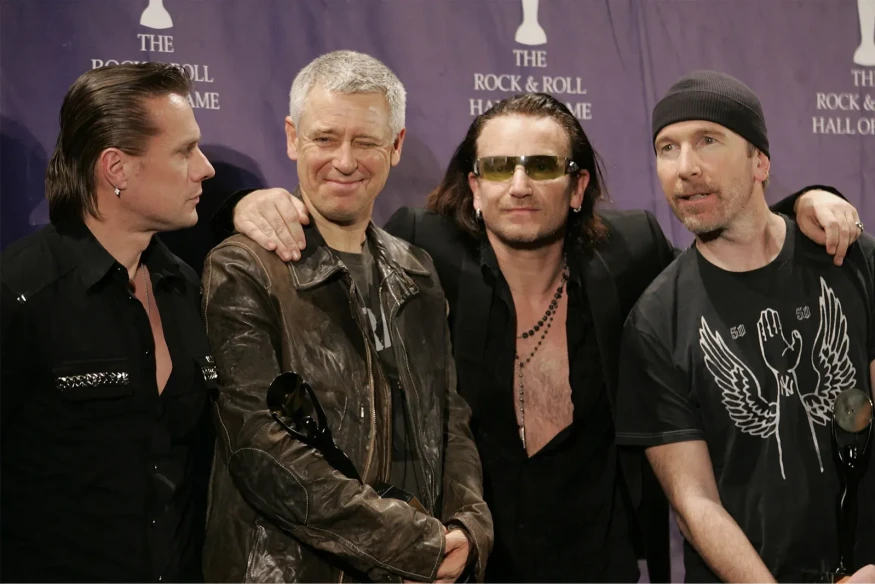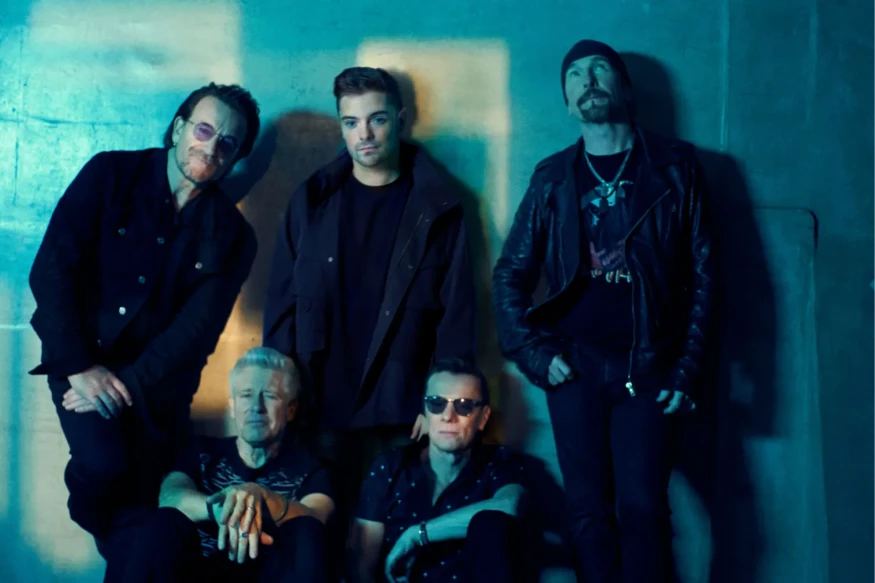
U2 and Martin Garrix have finally released “Fireflies,” a song that began taking shape six summers ago and only found its defining moment at Tomorrowland 2026. The collaboration brings all four members of U2 together with the Dutch producer for the first time, turning a long-running creative relationship into a fully realized chapter of its own.
When “Fireflies” finally surfaced at Tomorrowland, U2 and Martin Garrix were not simply unveiling another high-profile crossover single. They were closing a creative loop that had been open for years — one built through separate projects, different phases of their careers and a shared curiosity about what happens when two very different musical languages collide.
Garrix had been working on the song for roughly six years, but “Fireflies” remained unfinished until the right moment arrived. That moment came in front of one of electronic music’s most committed festival audiences, with The Edge appearing onstage beside him. What could easily have been treated as a surprise guest spot instead felt like the public arrival of something that had been developing quietly for much longer.
The collaboration matters partly because the distance between U2 and Garrix no longer feels like an obstacle. Their relationship has been building steadily. Garrix previously worked with Bono and The Edge on “We Are the People,” created for the UEFA European Football Championship, and later produced “Your Song Saved My Life,” which appeared on the “Sing 2” soundtrack. More recently, he contributed to “Scars” from the “Easter Lily” EP.
“Fireflies,” however, changes the scale of that history. This is not a partial meeting between Garrix and selected members of U2. It is the first time the complete band has entered the same recording with him.
That difference can be heard in the way the track handles size. “Fireflies” is constructed like an open-air anthem — music designed to travel across distance rather than remain contained within headphones or a studio environment. It keeps the precision and momentum of Garrix’s electronic production while leaving room for the architecture U2 have spent decades perfecting: The Edge’s guitar, the sense of lift in the arrangement and the emotional expansion that happens when a song appears built for thousands of people at once.
The result does not sound like U2 simply stepping into an EDM production, nor like Garrix borrowing a rock band for dramatic effect. It feels closer to a search for the point at which both approaches can become larger together.
That is why Tomorrowland was such an appropriate place to reveal it. Garrix did not test the song in a neutral environment. He dropped it directly into one of the most demanding festival settings in electronic music, where audiences understand instinctively when a record has the scale required for a field that size.
The Edge’s appearance made the moment more unpredictable. He later described the experience as another reminder of why he loves outdoor shows, joking about preferring stages without roofs. Beneath the humor is something that has always been central to U2: their understanding of music as physical space. The audience is not simply there to receive the performance. It becomes part of the architecture of the song.
For Garrix, the premiere carried a different kind of emotional weight. He revealed that work on “Fireflies” began six summers earlier, turning the release into a small story about patience. Electronic music often moves at extraordinary speed, with collaborations appearing, circulating and disappearing within much shorter cycles. Six years is practically an era.
Garrix described the Tomorrowland moment as electric and almost unreal. But what appears to have stayed with him most strongly was not only the size of the crowd or the spectacle of the premiere. It was the chance to observe the chemistry between all four members of U2 — the internal mechanism of a band that has now existed for half a century.
That longevity may be the most interesting element of the collaboration. U2 are currently looking backward and forward at the same time. In 2026, they mark 50 years together, but rather than treating the anniversary only as an excuse for retrospective celebration, they continue to release new material.
Earlier this year came the “Days Of Ash” EP, followed by “Easter Lily” on Good Friday. “Street of Dreams” has already opened the path toward their next studio album, expected later in the year. “Fireflies” therefore sits between two timelines: five decades of history and a band still actively searching for new ways to move.
Garrix, meanwhile, is having an unusually dense creative year of his own. Before “Fireflies,” he had already worked with Madonna on “Bizarre” for her new album “Confessions II,” while May brought his collaboration with Ed Sheeran, “Repeat It.”
A pattern is becoming increasingly clear. Garrix no longer treats pop and rock as external spaces where he simply adds electronic production. He has evolved into a producer capable of moving between generations and aesthetics, from Madonna and Ed Sheeran to U2, without erasing the identity of the artist standing opposite him.
On “Fireflies,” that flexibility becomes one of the track’s defining strengths.
Behind all the major names, however, the story remains surprisingly simple. The song was not ready merely because it had been written. It became ready when the right creative conditions finally existed.
U2 and Garrix had already moved through stadium-scale anthems, film soundtracks and smaller production collaborations. They needed time before the entire band could enter the same equation. That gives “Fireflies” the feeling of an organic progression rather than an opportunistic pairing between famous names.
This is not a collaboration that exists because two global acts could make one happen. It exists because both sides had already tested their chemistry enough times to know that there was something more to pursue.
The timing also gives the song extra resonance for U2. Their next studio album is expected later in 2026, with “Street of Dreams” already introduced as an early glimpse of the project. The record will arrive during the band’s 50th anniversary year and will represent their first full studio LP since “Songs of Surrender” in 2023.
“Fireflies” runs alongside that story rather than belonging completely inside it. It feels like a parallel route — a reminder that even at this stage of their career, U2 are still willing to place themselves inside unfamiliar production environments and see what happens.
And perhaps that is the lasting image of the song: Martin Garrix standing before an enormous electronic audience, The Edge beside him, and a six-year-old idea finally sounding as though it had been waiting for exactly that night.