Rosalía makes a striking return in Madrid with her Lux Tour, launching a four-night run at the Movistar Arena just days after her Milan setback. Blending orchestral sound, modern production, and commanding stage presence, Rosalía delivers a multi-layered live experience that reaffirms her position on the global pop stage and signals a new creative chapter.
There are moments in an artist’s career that feel less like a return and more like a statement. That is exactly the tone Rosalía set as she stepped onto the stage in Madrid, opening her Lux Tour with a performance that carried both weight and intention. Following the sudden interruption of her Milan show due to illness, expectations were inevitably shaped by uncertainty. What unfolded instead was a performance that felt controlled, focused, and fully aligned with where she stands creatively right now.
From the very beginning, Rosalía projected a sense of clarity. The energy was not rushed or overly heightened. Instead, it was measured, deliberate, and carefully directed toward building an experience rather than chasing immediate impact. This approach defined the entire evening, turning what could have been a straightforward comeback into something more layered and intentional.
Madrid, in this context, is more than just another stop on the tour. For Rosalía, it represents a city closely tied to her artistic identity. During the show, she briefly reflected on her early days performing in small flamenco venues, a time when her sound and presence were still evolving. The reference was understated, but it added perspective, placing her current scale within the context of where it all began.
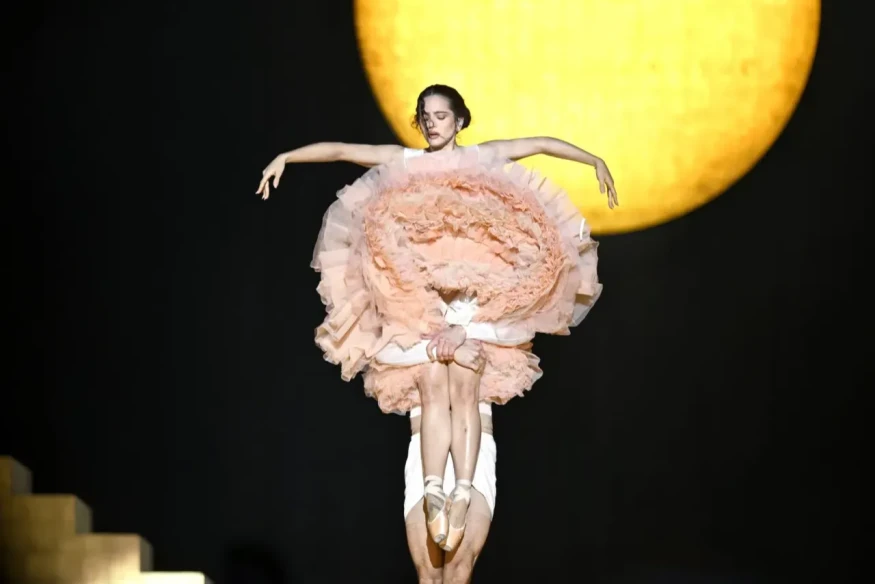
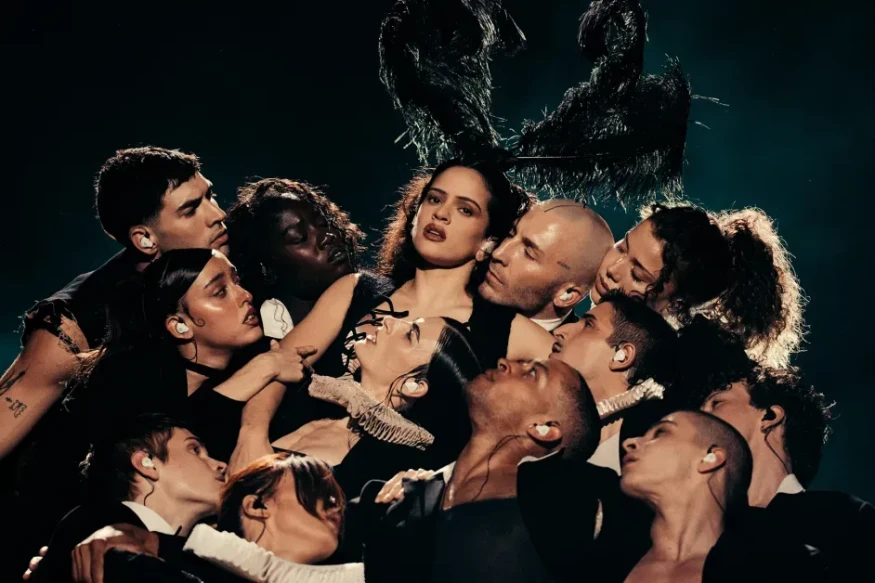
The structure of the Lux Tour plays a key role in shaping the experience. Divided into distinct segments, the show unfolds with a clear sense of progression. At the center of it all is a full orchestra, positioned as a core element rather than a supporting layer. This choice expands the sonic range of the performance, allowing Rosalía to move fluidly between flamenco roots, pop sensibility, and contemporary production without losing cohesion.
What stands out is how naturally Rosalía navigates this complexity. Even within a production that blends multiple styles and visual elements, her presence remains grounded. She avoids excess, focusing instead on details that give each moment depth. Whether in more theatrical sequences or stripped-back performances, the sense of control never shifts.
Songs like “Mio Cristo” highlighted this balance. The intensity of the performance was matched by the audience’s response, creating a shared dynamic that extended beyond the stage. Rosalía guided that interaction without forcing it, allowing the moment to build organically and reinforcing the connection between performer and crowd.
At the same time, the show does not rely solely on high-impact moments. There is a rhythm to the setlist that allows space for contrast. Lighter segments provide breathing room, preventing the performance from becoming one-dimensional. This pacing reflects a broader understanding of how to sustain engagement over the course of a full-scale live experience.
One of the most distinctive moments came during her rendition of “Can’t Take My Eyes Off You.” Instead of keeping distance, Rosalía stepped off the stage and moved closer to the audience. The gesture shifted the scale of the performance, briefly transforming a large production into something more intimate and immediate.
That sense of closeness extended into quieter sections of the show. Seated at the piano, Rosalía addressed the audience directly, creating pauses that felt intentional rather than incidental. These moments allowed for a different kind of connection, one that did not depend on volume or movement but on presence.
There was also space for humor and unpredictability. The appearance of Soy Una Pringada introduced a lighter tone, adding variation without disrupting the overall identity of the show. Rosalía integrated this shift seamlessly, moving between moods without losing coherence.
As the performance built toward its peak, tracks like “Despechá” brought a surge of energy that filled the entire arena. The audience response intensified, creating a collective momentum that extended beyond individual moments. Rosalía maintained control within that energy, ensuring that the performance remained structured even at its most dynamic points.
The closing sequence moved in a different direction. With “Magnolias,” Rosalía shifted toward a more minimal approach, reducing visual elements and focusing on atmosphere. The transition created a quieter ending that contrasted with the earlier intensity, offering a sense of resolution without relying on spectacle.
This Madrid run marks more than just the Spanish leg of the Lux Tour. It provides a clear indication of where Rosalía is positioning herself at this stage of her career. With upcoming stops in Lisbon and Barcelona before heading to the United States, the tour is shaping into a project that prioritizes depth and structure as much as scale.
What becomes evident throughout the performance is that Rosalía is not simply returning after a brief interruption. She is redefining how her music is presented in a live setting. The emphasis shifts from spectacle alone to a more balanced approach, where sound, narrative, and interaction are given equal weight.
In a live landscape often driven by visual impact, Rosalía takes a different direction. The Lux Tour builds its strength through cohesion and intention, allowing each element to contribute to a unified experience rather than competing for attention.
As the tour continues, the Madrid performances stand as a reference point for what this new phase represents. Rosalía moves forward with a clearer sense of identity, combining technical precision with emotional awareness in a way that feels both controlled and expansive at the same time.