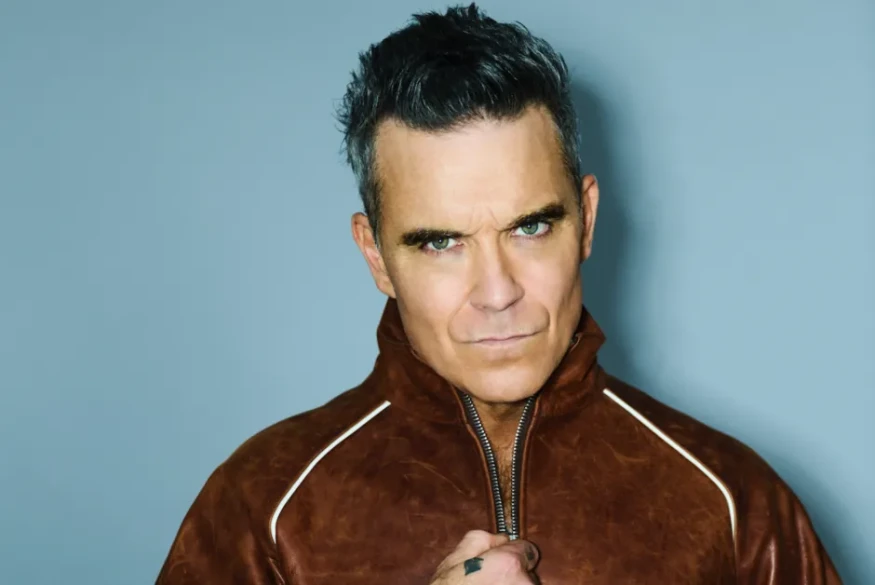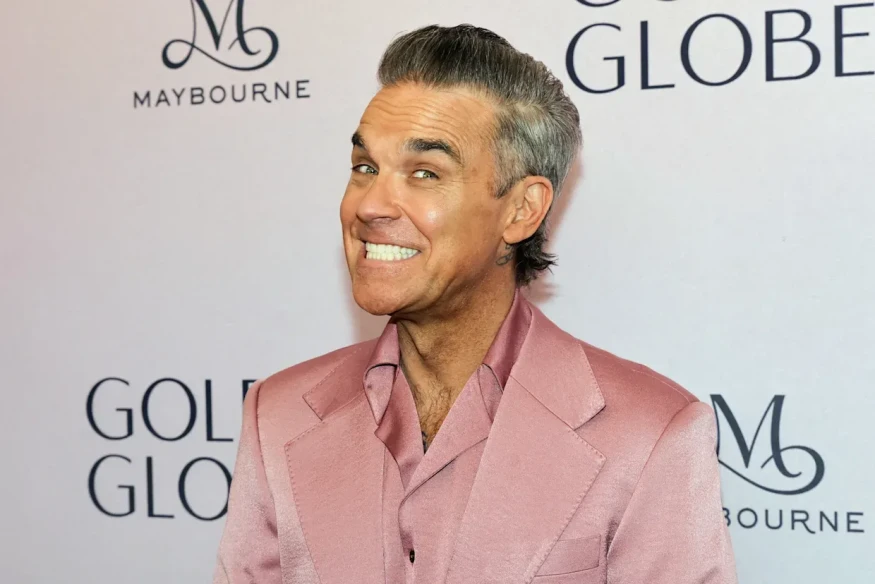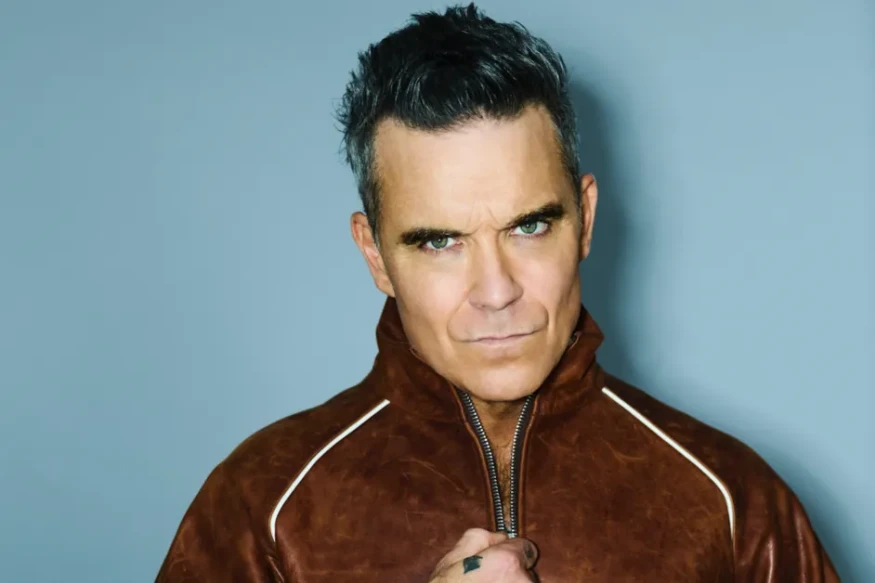
Robbie Williams opens up about success, fame, and the 90s with rare honesty, reflecting on the years that shaped his career and the moments he couldn’t truly enjoy at the height of his popularity.
Robbie Williams is finally allowing himself to speak about success without hiding behind humor or self-mockery. With the release of his new album Britpop, which delivered the sixteenth number one of his career, he is revisiting the years that made him a global name and the emotional cost that came with it. This time, the conversation feels calmer, clearer, and more grounded in perspective than ever before.
At fifty-one, Robbie Williams sounds more at peace with his past than he has in decades. Instead of brushing off achievements or downplaying milestones, he is openly acknowledging them. He explains that in British culture, success is often treated with suspicion, almost as something that needs to be punctured before it grows too big. According to him, this instinct to shrink your own wins is partly a survival mechanism and partly a cultural habit that keeps artists from becoming disconnected from reality.
For most of his life, Robbie Williams followed that rule instinctively. Even when his career reached incredible heights, he rarely allowed himself to enjoy the moment. Now, with Britpop topping the charts and a new tour on the horizon, he admits that he is making a conscious choice to experience success differently. Not with arrogance, but with presence. For once, he wants to stand still long enough to feel proud.
Looking back at the 90s remains complicated for Robbie Williams. That decade launched him into superstardom after his departure from Take That and the start of his solo journey. It was a time filled with massive songs, sold-out tours, and constant media attention. From the outside, it looked like everything was going right. Internally, it was a very different story.
During those years, Robbie Williams was struggling with depression, anxiety, and a sense of emotional numbness. He has spoken openly about how mental health can block joy, even when life appears perfect. Success, applause, and recognition passed in front of him, but they never fully landed. He explains that depression creates distance between you and your own life, turning even extraordinary moments into something flat and unreachable.
Today, he can finally recognize how intense and important that period was, even if he couldn’t feel it at the time. He describes the 90s as the last truly iconic decade of pop culture, a time with a strong identity, bold sounds, and clear visual language. For Robbie Williams, it was a colorful era lived in grayscale from the inside.
What makes his reflections different now is the absence of bitterness. He speaks about those years without anger or regret, but with understanding. He once described the 90s as an amazing time to feel terrible, a sentence that captures the strange contrast between cultural excitement and personal struggle. The irony no longer hurts the way it once did.
Robbie Williams also points out how decades used to feel distinct. The fifties, sixties, seventies, eighties, and nineties each carried their own mood, style, and sound. In contrast, modern culture often feels blended and harder to define. This observation is not meant as criticism, but as appreciation for the clarity and identity of the past. For him, the 90s stand out as a moment when pop culture felt fearless and unapologetic.
That clarity is part of what inspired Britpop. The album does not attempt to recreate the past, but it carries its spirit. Robbie Williams approached the project with honesty rather than nostalgia, focusing on what still feels real instead of chasing trends. The result connected strongly with listeners, proving that his voice still resonates when it comes from a place of truth.
Success, however, remains a complicated concept for Robbie Williams. He admits that for years he treated achievement like something dangerous, something that needed to be controlled or dismissed before it consumed him. Now, after decades of highs and lows, he sees success as something neutral. It is not a cure, but it is not the enemy either.
This shift in mindset is tied closely to mental health. Robbie Williams emphasizes that recognizing achievements does not mean ignoring pain. Instead, it means allowing space for both realities to exist at the same time. He can be proud of his career while acknowledging how difficult parts of it were.
His reflections also touch on the pressure faced by young artists today. Fame arrives faster, criticism spreads wider, and privacy is harder to protect. Having lived through an earlier version of global attention, Robbie Williams understands the cost of visibility. His message is not one of warning, but of awareness. Success is powerful, but it needs support, boundaries, and self-understanding to be sustainable.
What stands out most in his current outlook is balance. Robbie Williams no longer feels the need to distance himself from his own story. He does not dismiss his achievements, nor does he romanticize his struggles. Instead, he places them side by side, recognizing both as part of the same journey.
As he prepares to take Britpop on the road, Robbie Williams appears grounded rather than hungry. The tour is not framed as a comeback or a redemption arc, but as a continuation. He knows who he is now, and he seems comfortable standing in that space.
For fans, this phase feels quietly powerful. It is not about reinvention or shock value. It is about clarity. Robbie Williams is no longer running from success or chasing it blindly. He is simply allowing himself to be present in it, something he admits he couldn’t do when it mattered most.
In a career filled with extremes, this moment feels different. Not louder, not bigger, but steadier. Robbie Williams is finally giving himself permission to appreciate what he built, even if it took years to get there.