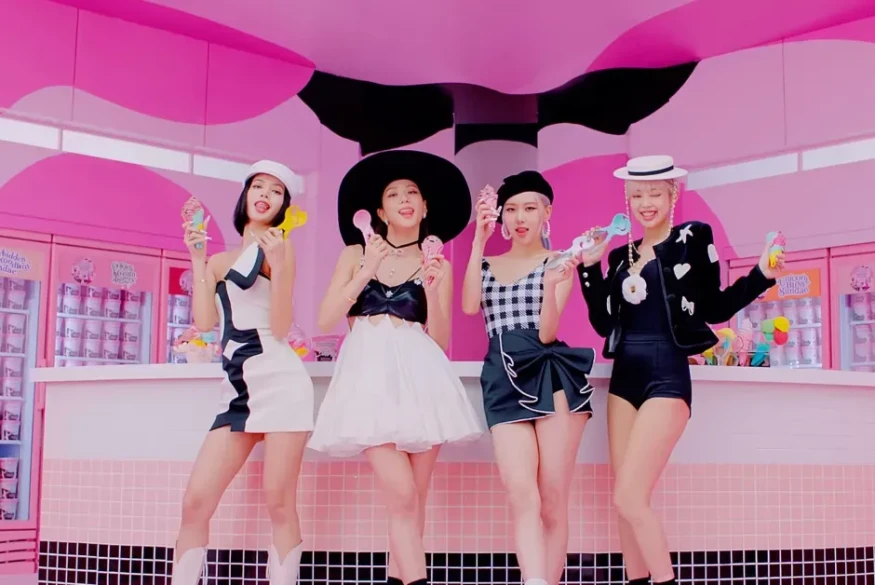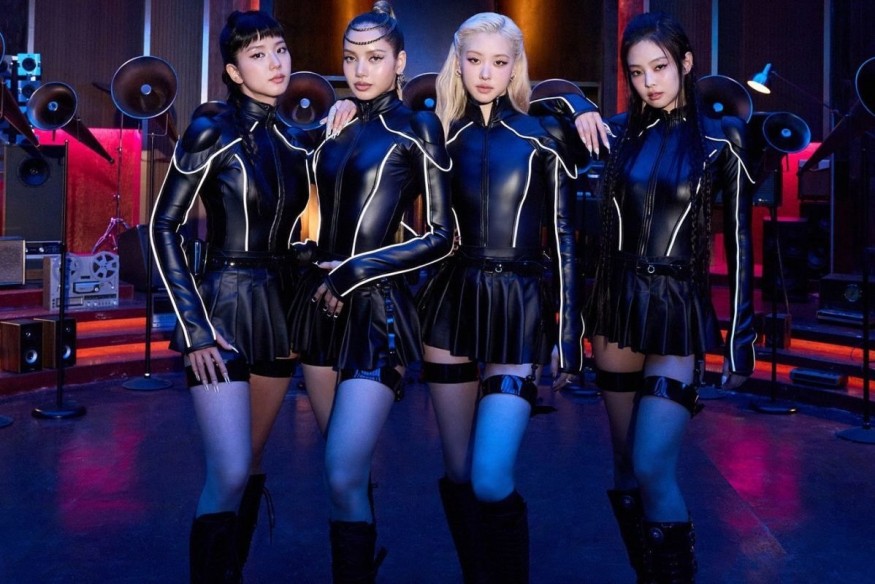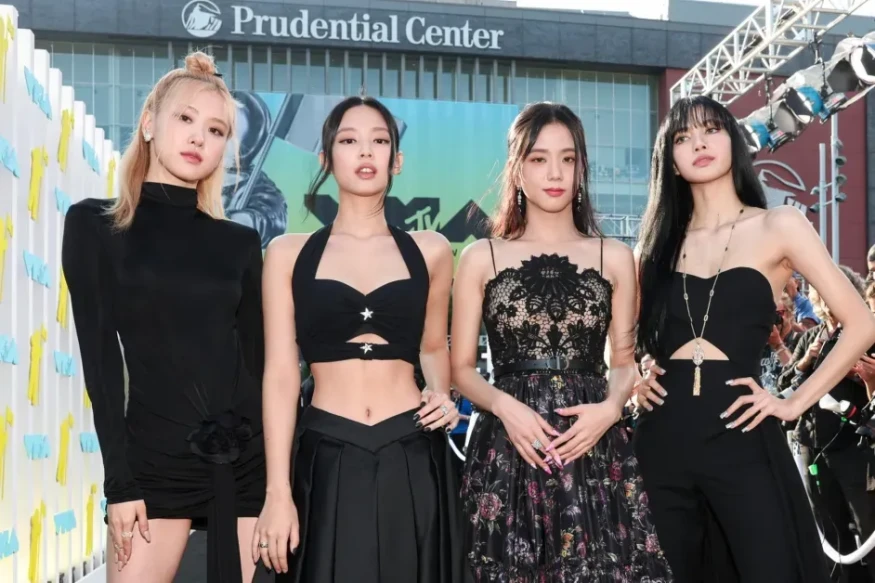
BLACKPINK are celebrating 10 years since their debut with a decade of records that changed the scale of what a K-pop girl group could achieve. From early Billboard breakthroughs and YouTube history to Coachella, Spotify and 100 million subscribers, JENNIE, LISA, ROSÉ and JISOO did more than expand K-pop’s global reach — they helped redefine what a Korean girl group could become in mainstream pop.
BLACKPINK are celebrating 10 years since their debut with a decade of records that changed the scale of what a K-pop girl group could achieve. JENNIE, LISA, ROSÉ and JISOO did not need years to start rewriting expectations. Only months after debuting with “Square One,” “Playing With Fire” made them the first K-pop girl group to enter the Canadian Hot 100. At the time, it looked like an early breakthrough. In hindsight, it was the first sign of a pattern that would keep repeating: every new era seemed to arrive with another milestone attached to it.
The real shift came in 2018 with “Ddu-Du Ddu-Du” and “Square Up.” The single debuted at No. 55 on the Billboard Hot 100, then the highest position ever reached by a K-pop girl group, while “Square Up” climbed to No. 40 on the Billboard 200. BLACKPINK also reached No. 1 on the Emerging Artists chart. In the space of a week, the group moved from being one of K-pop’s fastest-rising names to becoming a real global chart force. Those numbers mattered because they were not only personal wins. They raised the ceiling for every girl group that would come after them.
YouTube quickly became the clearest place to see how fast that global reach was growing. “Ddu-Du Ddu-Du” collected 36.2 million views in its first 24 hours and passed 100 million in only 10 days. In 2019, it became the most-viewed music video by a K-pop group and later the first K-pop group video to move beyond 1 billion views. At a moment when K-pop’s international growth was becoming increasingly tied to digital platforms, BLACKPINK understood how powerful visual identity could be. Their videos did not simply support the songs. They created events around them.
“Kill This Love” pushed that relationship with YouTube even further. In 2019, the video opened with 56.7 million views in its first day and became the biggest music video debut in YouTube history at the time. That same year, BLACKPINK became the first K-pop girl group to perform at Coachella. The importance of that appearance went far beyond the festival itself. It marked the moment when a Korean girl group moved from dominating online conversation to standing inside one of the most visible spaces in Western pop culture.
From there, record-breaking moments began to feel almost built into every comeback. “How You Like That” arrived in 2020 with 86.4 million views in its first 24 hours and earned BLACKPINK three Guinness World Records. Around the same time, their YouTube channel moved beyond 40 million subscribers and started competing not just with other K-pop acts, but with some of the biggest names in music overall. The comparison was no longer limited to Korean artists. BLACKPINK were being measured alongside Justin Bieber, Ariana Grande, Ed Sheeran and Eminem.
One of the most symbolic moments came in 2021, when BLACKPINK passed Justin Bieber to become the most-subscribed artist on YouTube. The group credited much of that success to BLINKs, and that connection between artist and fandom has shaped nearly every chapter of their rise. The numbers are massive, but they have always been powered by a fan community that treats a comeback, video premiere or festival appearance like a shared global event. BLACKPINK’s digital strength has never been only about scale. It has also been about organization, loyalty and the ability of fans to turn releases into cultural moments.
“Born Pink” brought another major shift in 2022. BLACKPINK became the first K-pop girl group to reach No. 1 on the Billboard 200 and only the third K-pop group overall to top the chart. “Pink Venom” opened with 90.4 million YouTube views on its first day and also became the biggest daily Spotify debut by a female artist that year. By this point, the conversation had clearly changed. The question was no longer whether BLACKPINK could break through in Western markets. They had already done that. The new question was how much further they could go.
The answer arrived at Coachella in 2023. Four years after making history there for the first time, BLACKPINK returned as headliners and became the first Asian act to lead the festival lineup. The image carried real weight because it completed a circle. In 2019, they had arrived as trailblazers proving that a K-pop girl group belonged at Coachella. In 2023, they came back as one of the main attractions, no longer asking for space but owning it.
The same period brought more records on streaming platforms. Guinness World Records recognized BLACKPINK in 2023 as the most-streamed female group on Spotify after they passed 8.8 billion streams. In 2024, “How You Like That” crossed 1 billion streams and made them the first K-pop girl group to enter Spotify’s Billions Club. That milestone mattered because it showed durability. A huge first week can be powered by hype. A billion streams over time shows that listeners keep returning long after the release cycle ends.
That staying power became even more obvious when the members began focusing on separate solo careers. JENNIE, LISA, ROSÉ and JISOO built individual identities without weakening the BLACKPINK name. If anything, the time apart increased anticipation for the group’s return. When they came back in 2025 with the DEADLINE World Tour and “Jump,” the response showed that the space between group releases had not reduced interest. “Jump” reached No. 1 on Global Excl. U.S. and helped make BLACKPINK the female act with the most No. 1 songs in the history of that chart.
Then came one of their biggest achievements yet. In 2026, shortly before the release of “DEADLINE,” BLACKPINK became the first artist in YouTube history to pass 100 million subscribers. The record was no longer about K-pop or girl groups. It was a platform-wide achievement for any music artist. Nine years and eight months after launching their channel, JENNIE, LISA, ROSÉ and JISOO had reached a number no other artist had reached before.
A few months later, Guinness World Records honored BLACKPINK with the title ICON, recognizing the larger impact behind their long list of firsts. The award arrived at a point when individual statistics had started to form something much bigger. It was no longer about how many views one video collected or how high one album climbed. It was about a decade in which BLACKPINK repeatedly changed the reference point for what seemed possible.
One of the most striking parts of the story is that they achieved much of this without a huge discography. Their first full-length album, “The Album,” did not arrive until 2020. That made their rise especially unusual. BLACKPINK proved that influence is not always about releasing the most material. It can also be about making each era feel bigger, building a clear identity and keeping the audience invested even when the gaps between comebacks are long.
Their individual careers also strengthened the group’s overall mythology. Each member developed a different public image and creative direction, giving fans more reasons to stay connected between BLACKPINK releases. JENNIE pushed deeper into fashion and solo pop, LISA expanded her global performance identity, ROSÉ built a more emotional and singer-songwriter-focused presence, while JISOO continued to move between music, acting and luxury fashion. Their solo work did not erase the group. It made the group feel more layered.
That balance between individual power and collective identity is one of BLACKPINK’s most important achievements. Many groups struggle when members begin building separate careers because the public starts to see the group as something from the past. BLACKPINK have managed the opposite. Their solo success has made each reunion feel bigger. Fans do not only return for four familiar faces. They return for four artists who have grown separately and then bring that growth back into one shared space.
The first decade also changed the way global pop treats K-pop girl groups. Before BLACKPINK, there were already successful Korean acts with strong international audiences. What BLACKPINK did was help normalize the idea that a K-pop girl group could compete at the very top level of global pop without abandoning Korean music industry structures or identity. They became festival headliners, fashion powerhouses, chart leaders and digital giants while still operating as BLACKPINK.
That shift had a wider effect. Their success made it easier for future girl groups to be introduced to global audiences as serious commercial contenders from the start. International labels, festivals, fashion houses and streaming platforms no longer needed the same level of convincing. BLACKPINK had already shown that the audience existed.
Ten years after “Square One,” the group no longer needs to prove that it can open doors. The doors are already open. From Billboard and Spotify to Coachella and YouTube’s 100 million subscribers, BLACKPINK’s first decade is filled with milestones that once seemed unreachable for a K-pop girl group.
The more interesting question now is what comes next. “DEADLINE” and the group’s current era arrive at a point where JENNIE, LISA, ROSÉ and JISOO have already collected enough historic firsts to define an entire generation. Their second decade will not be measured only by whether they can break another record. It will be about how BLACKPINK choose to evolve when the biggest barriers have already been broken and the standard they are chasing is increasingly the one they created themselves.