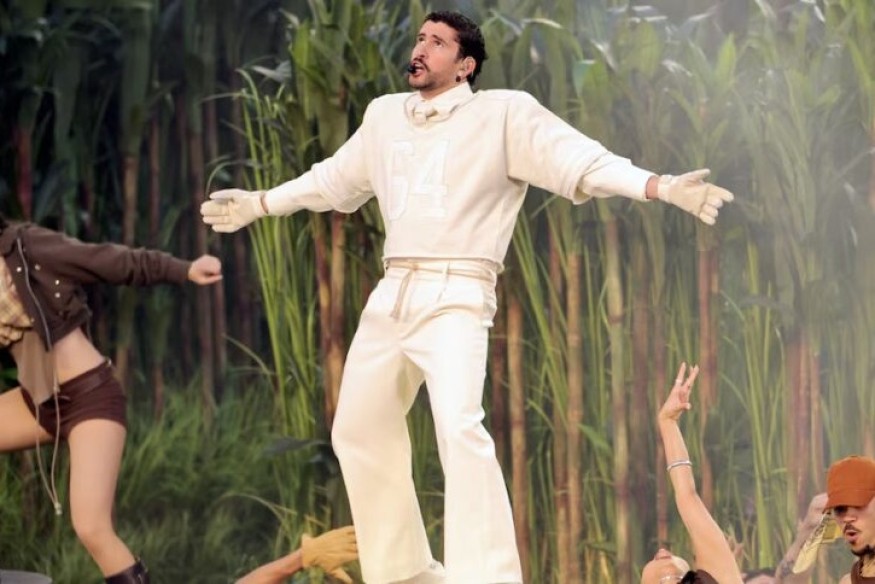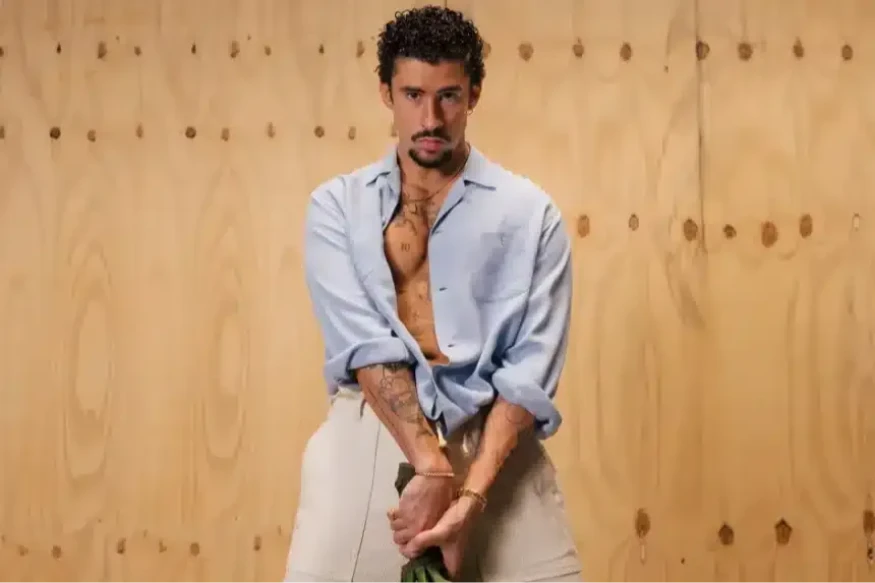
Bad Bunny has reached another huge YouTube milestone, with 20 videos now passing 1 billion views and keeping him at the top of the platform’s Billion Views Club. His latest entry is “Me Acostumbré,” the 2017 collaboration with Arcángel, turning an early Latin trap hit into the newest chapter of a record that tracks his rise from Puerto Rican newcomer to global pop superstar.
Bad Bunny has reached the point where another No. 1 is no longer the only way to measure the size of his career. YouTube is telling its own story. After “Me Acostumbré,” his collaboration with Arcángel, crossed 1 billion views, the Puerto Rican superstar officially reached 20 videos in the platform’s Billion Views Club. That gives him more entries than any other artist, with J Balvin following with 16. The gap is impressive, but the bigger story is what those 20 videos represent. They come from very different moments in Bad Bunny’s career, covering everything from his early Latin trap years to the global pop era that eventually made Spanish-language music impossible for the mainstream industry to treat as a side category.
“Me Acostumbré” makes the milestone especially fitting because it comes from 2017, before Bad Bunny became the stadium-filling superstar he is today. At the time, he was still emerging from Puerto Rico’s trap scene with a deep voice, a dark image and a sound that felt very different from the Latin pop dominating radio. The song with Arcángel, produced by DJ Luian and Mambo Kingz, was built around success, ambition and the strange pressure that comes when attention starts growing. Nearly a decade later, seeing that same video become his 20th billion-view entry feels like a reminder of how far his music has traveled.
The Bad Bunny YouTube record was not built around one giant song or even one specific period. It stretches across collaborations, remixes, reggaetón hits, trap records and songs that once might have been considered too local or too Spanish-language to reach this kind of global scale. “Te Boté (Remix)” has moved beyond 2.5 billion views, while Becky G’s “Mayores,” featuring Bad Bunny, has passed 2.6 billion. “No Me Conoce (Remix),” “I Like It,” “Mia,” “Dákiti” and “Me Porto Bonito” are also part of the same story. Together, they show a pattern that has lasted for years rather than one extraordinary viral moment.
“Dákiti” remains one of the clearest examples of how Bad Bunny learned to combine music and visuals without losing the personality that made him stand out in the first place. His collaboration with Jhay Cortez arrived with a video full of beaches, cars and a dreamy futuristic atmosphere that matched the track’s smooth, almost hypnotic sound. The visual did not simply promote the song. It helped create the world around it. With more than 1.6 billion views, “Dákiti” remains one of the strongest examples of how his videos became part of the experience rather than something added after the music was finished.
“Yonaguni” shows another side of that relationship with his audience. Instead of relying on a huge party or an expensive-looking fantasy world, the video follows Bad Bunny through quieter moments after heartbreak. He moves through daily life with the kind of loneliness that can make even ordinary routines feel empty. That simplicity helped the song connect. Its place in the Billion Views Club also proves that fans do not only turn to Bad Bunny for loud reggaetón, nightlife and high-energy records. Some of his biggest songs work because he knows when to slow everything down and let vulnerability become the main attraction.
Then there is “Tití Me Preguntó,” which moves in almost the opposite direction. The song is restless, playful and full of the energy of someone who refuses to settle down. Its video takes that idea and pushes it into a larger story, playing with Bad Bunny’s public image and his character’s endless romantic options before the narrative suddenly turns toward marriage. Gabriela Berlingeri appears as his love interest, adding another layer to a visual that constantly plays with the line between performance, humor and the curiosity surrounding his personal life. It is exactly the kind of pop storytelling that made his videos easy to replay.
“Callaíta,” created with Tainy, offers another mood entirely. The track feels warmer, slower and more relaxed, with a beach atmosphere that almost seems to predict the world Bad Bunny would later explore on “Un Verano Sin Ti.” Its video follows a woman who appears quiet on the surface but lives very differently once the night begins. That contrast between appearance and desire gives the visual a simple character-driven story. Bad Bunny has repeatedly understood that a successful music video does not always need a complicated plot. Sometimes one strong mood and one recognizable personality are enough to keep people returning.
His collaborations have been just as important to the 20-video milestone. From Drake on “Mia” to Cardi B and J Balvin on “I Like It,” Grupo Frontera on “Un X100to” and Karol G on “Ahora Me Llama,” Bad Bunny has spent years moving comfortably between different artists and different corners of Latin and mainstream pop. He rarely feels like someone simply arriving for a guest verse. His voice and delivery are so recognizable that even a short appearance can change the mood of a track without completely taking it away from the artist whose song it originally was.
That helps explain why so many of his billion-view videos are not only solo Bad Bunny releases. The YouTube record includes songs where he appears as the lead artist, a featured performer or a collaborator. In some ways, that makes the milestone even more revealing. His influence did not grow inside one carefully controlled catalog. It spread through other artists’ music as well. Each collaboration introduced him to another audience while also bringing those listeners closer to the sound that was developing around Puerto Rican trap and reggaetón during his rise.
His albums then turned that momentum into something much larger. “YHLQMDLG,” “Las Que No Iban a Salir,” “El Último Tour del Mundo,” “Un Verano Sin Ti,” “Nadie Sabe Lo Que Va a Pasar Mañana” and “Debí Tirar Más Fotos” document an artist who kept changing without abandoning Spanish as the center of his music. Four of those albums reached No. 1 on the Billboard 200, making Bad Bunny the only artist to top the chart four times with Spanish-language albums. What once might have been described as a crossover success eventually became something more significant: he stopped needing to cross over at all.
That is why the Bad Bunny YouTube milestone matters beyond a simple platform statistic. His videos helped make language feel less like a barrier for a global audience. Listeners did not need to understand every lyric immediately to connect with the attitude of “Soy Peor,” the loneliness of “Yonaguni,” the atmosphere of “Dákiti” or the summer freedom surrounding “Callaíta.” The visual language made each song easier to enter, while the music gave people a reason to stay. Over time, Spanish was not something his global audience had to look past. It became part of what made the entire experience feel unmistakably his.
The industry has already recognized the scale of that impact. In 2025, Bad Bunny was named Top Latin Artist of the 21st Century at the Billboard Latin Music Awards, based on his performance across the Top Latin Albums and Hot Latin Songs charts during the first 25 years of the century. His reaction was surprisingly modest. He said he still struggled to understand why he had been chosen from so many important artists. That sense of disbelief looks even more striking beside the numbers he continues to collect across streaming platforms, charts, tours and YouTube.
Twenty billion-view videos are difficult to dismiss as a lucky run. They show longevity, constant reinvention and an audience willing to follow Bad Bunny through very different sounds. “Soy Peor” belongs to a different chapter from “Dákiti.” “Ahora Me Llama” comes from another world compared with “Un X100to.” “Me Acostumbré” captures a version of him that existed before the stadium tours, major awards and record-breaking albums. Yet all of those songs now live together inside the same enormous digital catalog, each carrying a piece of the career that followed.
That catalog also works as a timeline of how Latin trap and reggaetón moved deeper into global pop culture. Watching the videos in order reveals more than the evolution of one artist. It shows the changing scale of Spanish-language music itself, from rawer trap visuals and early collaborations to major productions that compete with anything in mainstream global pop. The budgets grew, the audience expanded and Bad Bunny became more famous, but the language and cultural identity at the center of the music did not have to disappear for that growth to happen.
Now that “Me Acostumbré” has become his 20th entry in YouTube’s Billion Views Club, attention naturally moves toward whatever becomes No. 21. Bad Bunny is still releasing music, changing his visual style and moving between genres without settling into one predictable version of himself. That makes his next billion-view video difficult to call in advance. For now, YouTube holds a remarkable record of the journey: 20 videos above 1 billion views, songs from almost a decade of constant change and a digital history of how a Puerto Rican trap artist grew into one of the defining global pop stars of his generation.