The second “Michael” movie is officially moving toward production, with filming expected to begin in late 2026 or early 2027 following the extraordinary success of the first Michael Jackson biopic. Lionsgate is planning a bigger sequel that could incorporate musical sequences already filmed, while moving into a far more complicated period of Jackson’s life and career.
The story of Michael Jackson on the big screen is not ending with “Michael.” Lionsgate is now actively preparing a second film, with production expected to begin in late 2026 or early 2027. Motion Picture Group chair Adam Fogelson has confirmed that work on the sequel is moving forward, with a possible theatrical release toward the end of 2027 or during the first half of 2028. After the enormous commercial performance of the first movie, the question is no longer whether there will be another chapter. The challenge is deciding exactly what that chapter should become.
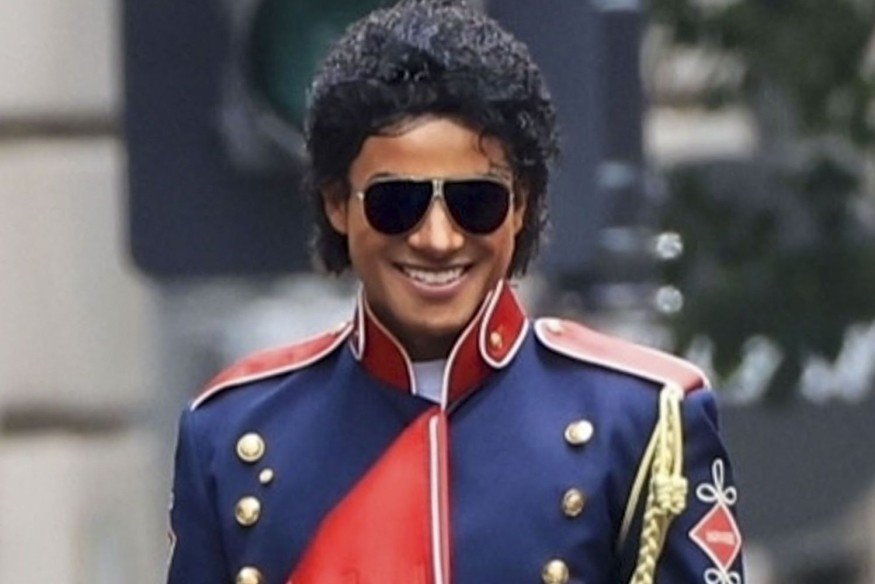
The first “Michael” followed Jackson from his childhood with the Jackson 5 through his transformation into the biggest pop star in the world, eventually reaching the “Bad” era and the massive global tour that followed. Jaafar Jackson, Michael’s nephew, took on the central role and faced an unusually difficult assignment: recreating a performer whose voice, movement, appearance and stage presence remain instantly recognizable decades after his death.
That first film had a relatively clear dramatic structure. It could tell the story of ascent. A gifted child becomes part of a successful family group, separates himself as an individual artist and eventually reaches a level of fame almost without precedent in modern entertainment. The music provided natural milestones, while albums, performances and increasingly ambitious visuals created the momentum of someone moving toward the top.
The sequel does not have that simplicity.
Once the story moves beyond the “Bad” era, Michael Jackson’s career becomes simultaneously bigger and considerably more complicated. The 1990s brought enormous albums, spectacular tours and some of his most ambitious performances, but they also brought increasing tabloid scrutiny and allegations of child sexual abuse that permanently changed the public conversation surrounding him.
That makes the second film a much more difficult proposition than simply continuing the timeline.
Material from this period had reportedly existed in earlier versions of the first movie before additional filming and restructuring changed its scope. One particularly complicated issue involved a provision connected to a previous legal settlement that restricted the Jackson estate from referring to Jordan Chandler, whose allegations became central to the scrutiny surrounding Jackson in the 1990s.
The issue demonstrates why the sequel cannot be approached like a conventional music biopic. Its filmmakers are working at the intersection of biography, legal restrictions, estate involvement and public expectations surrounding events that remain intensely disputed and emotionally charged. How much the second movie addresses those subjects — and how it frames them — could ultimately define the entire project.
Lionsgate also knows that audiences will not simply be waiting for more songs and recreated performances. By ending the first movie before the most controversial chapters of Jackson’s life, the story effectively creates an expectation that a sequel will move into more difficult territory. Avoiding those years entirely would leave an obvious gap. Addressing them, however, means moving away from the comparatively straightforward rise-to-fame narrative that powered the first film.
Fogelson has said the studio wants to make the biggest and best sequel possible while remaining disciplined about its cost. That balance matters because the commercial expectations have changed dramatically. The first “Michael” became a box-office phenomenon, establishing the franchise on a scale that makes the continuation significantly more valuable — and significantly more pressured.
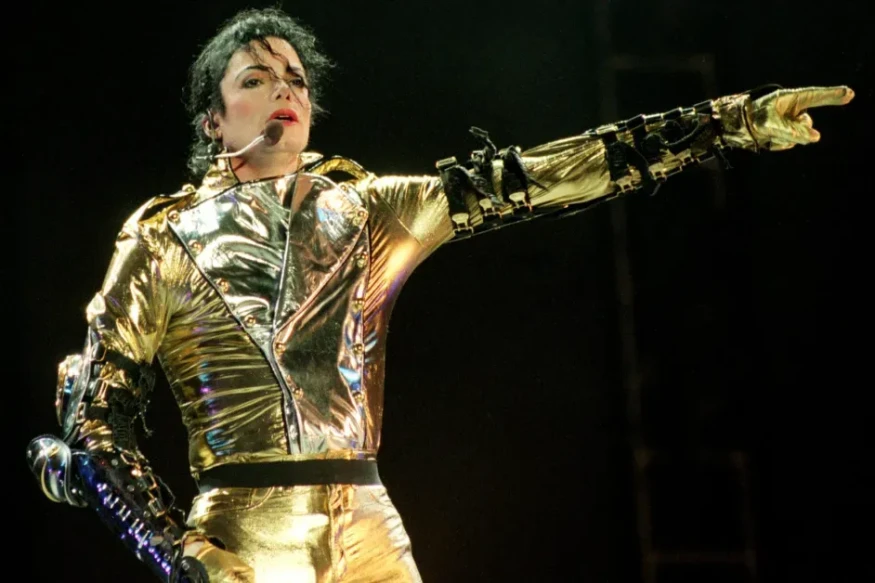
The success also reinforced something the music industry has understood for years: Michael Jackson remains an extraordinarily powerful global name. His catalog continues to reach listeners who were not alive during his career. His choreography remains embedded in contemporary pop performance, while his videos, costumes and visual language are still instantly recognizable.
That multigenerational recognition gives the sequel an enormous advantage. It does not have to introduce Michael Jackson to a new audience. Even younger viewers already know the silhouette, the moonwalk, the glove, the jackets and many of the songs. What the film has to provide is a reason to look beyond those familiar symbols.
Lionsgate also has material from the original production that could potentially help build that next chapter. Major musical sequences were filmed during the production process, and some footage that did not appear in the first film could reportedly be incorporated into the sequel. That gives the filmmakers a degree of continuity while allowing the new production to concentrate its resources on the periods that still need to be created.
The existing performance material could prove particularly valuable because the musical spectacle remains essential to any Michael Jackson film. However complicated his biography becomes, the story cannot be separated from the extraordinary scale of his work as a performer. A sequel that became exclusively dark would risk losing the contrast that made his life so culturally fascinating in the first place.
Jackson’s career during this period continued to produce moments of enormous public excitement. The “Dangerous” era expanded his visual ambitions, his live performances remained global events and his ability to command attention had not disappeared. At the same time, almost everything surrounding him became more intense. Fame was no longer something he was trying to achieve. It had become the environment in which he existed.
That shift may provide the sequel with its strongest dramatic idea.
In the first movie, success can function as a destination. In the second, success becomes a problem the character has to live inside. Michael Jackson had already reached a level of celebrity that made ordinary life almost impossible. Every change in his appearance became news. Every relationship generated speculation. His homes, spending, friendships and private behavior were treated as public material.
Neverland became one of the clearest symbols of that contradiction. It could be seen as a private world built by someone with almost unlimited resources, but it also became inseparable from the public mythology surrounding Jackson. The distinction between the person and the celebrity image became increasingly difficult to identify.
For Jaafar Jackson, that means the acting challenge is likely to become more demanding as well. The first film required him to recreate the evolution of a young performer becoming a superstar. The sequel potentially asks him to portray someone already trapped inside the consequences of that superstardom.
Imitating recognizable movement will not be enough. The performance will need to communicate the isolation, pressure and contradiction of a person who could command stadiums while living under extraordinary scrutiny away from them. The more famous Michael Jackson becomes within the story, the more difficult it may be for the film to show the human being underneath the iconography.
That is where the sequel could become more interesting than a conventional continuation. The central question is no longer how Michael Jackson became famous. Everyone knows that he did. The question becomes what happens to someone after fame has expanded beyond any reasonable human scale.
At the same time, the filmmakers face an unavoidable problem of perspective. A biographical movie supported by an artist’s estate naturally raises questions about how critically it is willing or able to examine its subject. That becomes particularly important when the narrative reaches allegations that remain central to how Jackson’s legacy is debated.
The sequel will therefore have to decide what kind of movie it wants to be. It can remain primarily a celebration of the music and performance, treating controversy as contextual material around the edges. Or it can attempt something more complicated, allowing conflicting parts of Jackson’s public story to exist inside the same film.
Neither choice is simple.
A purely celebratory sequel could satisfy audiences primarily interested in the music but face criticism for avoiding essential parts of the biography. A film that moves aggressively into the controversies could alienate some of the fan base while creating entirely different legal, narrative and ethical challenges. Finding a convincing middle ground may be the most difficult task facing the production.
The enormous success of the first film only increases that pressure. Lionsgate already knows there is an audience. The studio does not have to prove that people are interested in Michael Jackson. What it has to discover is whether that audience will follow the story when the material becomes less comfortable and more complicated.
There is also a larger opportunity. If the second film succeeds, “Michael” could become something more ambitious than a standard two-part music biography. Jackson’s career contains enough distinct eras, visual transformations and cultural turning points to support a much broader cinematic treatment. But expanding the scale creates another danger: the bigger the franchise becomes, the easier it is for the individual at its center to disappear behind the spectacle.
That tension will likely determine whether the sequel works. Michael Jackson’s life contained extraordinary musical joy and extraordinary public conflict. Separating those two realities may make for an easier movie, but bringing them together could make for a more meaningful one.
Production is currently expected to begin in late 2026 or early 2027, meaning many of the most important decisions will have to be made before cameras start rolling. The screenplay will determine which years receive attention, which events are included and how far the filmmakers are prepared to move beyond the celebratory energy of the first chapter.
After the commercial phenomenon of the first “Michael,” the sequel no longer has to prove that audiences want to watch Michael Jackson’s story. Its much harder task is proving that the next part of that story can be told with the scale, complexity and dramatic honesty required by one of the most celebrated — and most contested — figures in modern pop culture.