A pair of Justin Bieber sneakers, a Jung Kook jacket, a Jimin jersey, Madonna’s gloves and a striking Shakira outfit all took on a completely different value after the 2026 World Cup. Items worn for only a few minutes during the final’s halftime show became collector’s pieces at Christie’s One Goal charity auction, raising major sums for children’s education around the world.
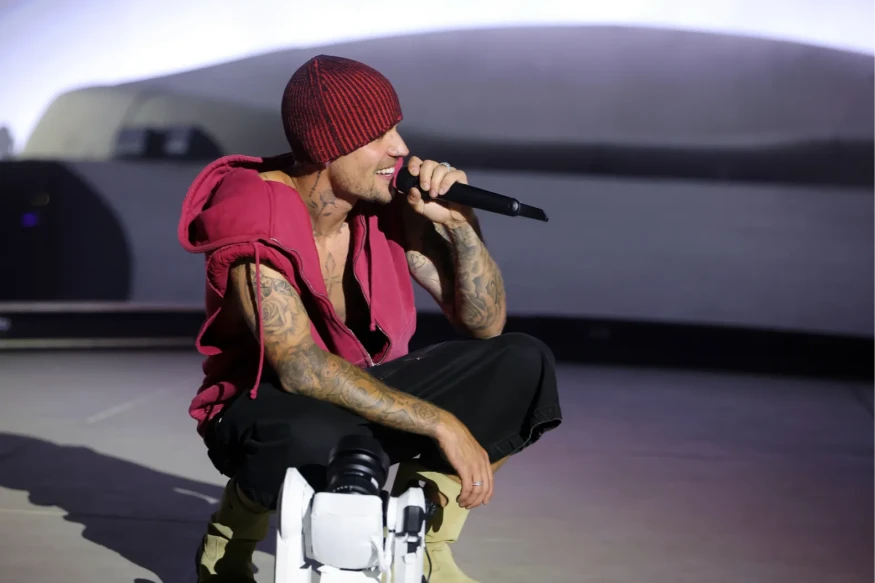
Justin Bieber may have worn his sneakers for only a short part of the FIFA World Cup 2026 final halftime show, but their story did not end when the lights went down at MetLife Stadium. The latte-colored SKYLRK Matter Daddy sneakers, finished with pale pink details, were later offered through Christie’s and sold for $26,400. Their original estimate had been only $2,000 to $4,000. Within a few bids, their value had climbed to more than 10 times what experts initially expected.
That jump says a lot about the way modern pop culture creates value. An object does not need to belong to an artist for years to become meaningful. It does not even need to be connected to an entire album era. Sometimes it only needs to appear at the right moment, on the right person and in front of the right audience. Once Bieber wore those sneakers during one of the biggest televised music events of the year, they stopped being ordinary footwear. They became part of a specific memory.
Bieber wore them on July 19 during the Spain vs. Argentina final, which featured the first halftime show in FIFA World Cup final history. He performed the acoustic ballad “Everything Hallelujah,” while the latte colorway of the Matter Daddy essentially made its public debut during the appearance. But Bieber was only one part of a much larger lineup. Madonna, BTS, Shakira, Burna Boy, the Muppets’ Electric Mayhem, Gustavo Dudamel with the New York Philharmonic and Coldplay’s Chris Martin were all involved in the event.
That lineup helps explain why the auction quickly became more than a sale of celebrity memorabilia. One Goal gathered physical pieces from a night that had already been designed as a global pop spectacle, mixing generations, genres and fan communities inside one halftime show. When those objects moved from the stage to Christie’s, the event gained a second life. The performances were over, but the clothes, accessories and props connected to them could still carry the emotional value of the night.
The money raised through the auction supports the FIFA Global Citizen Education Fund, a $100 million initiative created to expand access to education and football for children in different parts of the world. That gave the bidding another purpose. Fans and collectors were not simply paying extreme prices for celebrity-owned items. Their interest was also being turned into funding for a wider social project.
If Justin Bieber’s sneakers stood out because they smashed their estimate, BTS dominated the auction in total value. Items worn by the group during their performance of “Dynamite” brought in a combined $300,300. The number is huge, but it also reflects the intense collecting culture that has grown around BTS and the ARMY over the years.
The most expensive individual BTS item was a red-and-white jersey worn by Jimin, featuring BTS patches. It sold for $110,000. That price shows how dramatically the meaning of a stage outfit can change when it is connected to an artist with a huge international fan base. The jersey was not valuable because of the fabric itself. It became valuable because Jimin wore it during a major global performance tied to one of BTS’ most recognizable songs.
V’s custom black silk scarf also became a major item. Featuring the BTS name, devil faces and football imagery, it sold for $46,200. Jung Kook’s red, black and white motocross jacket reached exactly the same price. RM’s black chunky Untitled-03 boots sold for $19,800, while j-hope’s black and red fingerless gloves brought in $28,600.
Other BTS pieces also attracted serious bids. Jin’s red leather belt sold for $16,500, while Suga’s red leather trousers, which included a stitched silk scarf featuring the names of all seven members, reached $33,000. The differences between the prices were interesting because they showed that collectors were not simply buying anything connected to BTS at the same level. Each object carried its own appeal depending on the member, the design and how closely it could be linked to the visual identity of the performance.
BTS have spent years building a fan culture where physical objects matter. Albums, photocards, limited editions, fashion pieces and merchandise often become part of the relationship between the group and the ARMY. The World Cup auction pushed that idea into a much rarer category. These were not products made for fans. These were the actual clothes and accessories worn on stage during a globally watched event.
Madonna brought a different kind of collectible power. A pair of bright pink, decorated fingerless gloves worn during the opening section of the halftime show sold for $41,800. They were among the most instantly recognizable objects in the sale because they looked exactly like the kind of item people associate with Madonna: theatrical, bold, slightly excessive and strong enough to work as a pop artifact even outside the performance itself.
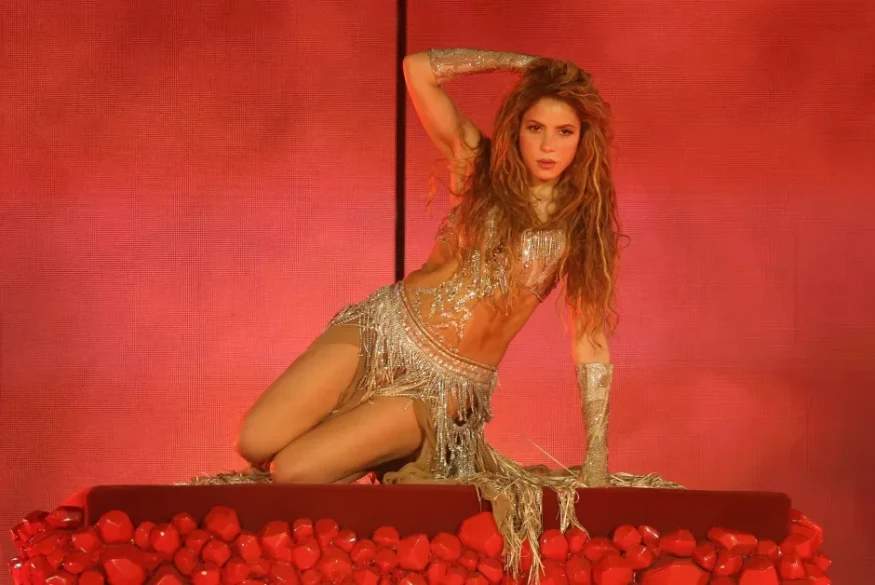
Shakira was represented by several pieces. The bright yellow costume she wore in the official “Dai Dai” music video sold for $8,250, while an Earth Ball football signed by Shakira, Kaká and FIFA president Gianni Infantino reached $3,850. Those prices were lower than the biggest BTS totals, but they added another layer to the auction. Every artist left behind a different kind of physical memory from the wider World Cup celebration.
Chris Martin contributed some of the most personal objects in the sale. A two-page handwritten lyric sheet for “We Dance,” together with the halftime show setlist, his signature and a personal message, sold for $15,400. Unlike a jacket or a pair of sneakers, handwritten lyrics carry another kind of appeal. They give the buyer access to the part of music that exists before the final performance, when a song is still words on paper rather than something heard by millions of people.
A blue World Cup Earth Ball signed and marked by Martin with the names of the halftime performers also sold for more than $6,000. Again, its value had little to do with the football itself. What mattered was the people connected to it, the specific night it represented and the fact that there would never be another object exactly like it.
That is the main reason celebrity auctions can create such extreme prices. The object stops being judged by what it cost to make. A jacket is no longer simply a jacket. Gloves are no longer just gloves. Sneakers are no longer sneakers. Their price begins to reflect memory, rarity and access. Buyers are paying for a physical connection to a moment they cannot recreate.
The World Cup setting made that effect even stronger. The final was not just another concert appearance. It was a globally watched sporting event with a halftime lineup built to become part of pop history. The scale of the audience gave every outfit and prop an extra level of recognition. Even objects used for only a few minutes became attached to an event that millions of people had seen in real time.
There is, of course, something extravagant about the numbers. Paying $110,000 for a jersey or $26,400 for sneakers has almost nothing to do with the normal financial value of those products. But collectors are not really buying fabric, leather, rubber or stitching. They are buying the story attached to them. They are paying for proof that the object was physically present during a specific cultural moment.
That desire is one of the strongest forces in modern celebrity memorabilia. Digital culture has made stars more visible than ever, but physical objects can feel more exclusive precisely because they cannot be copied in the same way. Millions of people can watch the performance online. Only one person can own the actual jersey Jimin wore on stage.
The One Goal auction gave that collecting instinct a practical result. The money was not simply being exchanged for expensive celebrity items with no wider purpose. It was directed toward a fund focused on education and access to sport for children. That does not remove the luxury or the excess surrounding the bidding, but it changes the final meaning of the sale.
It also gives the World Cup halftime show a longer life than the broadcast itself. Bieber’s sneakers, Jimin’s jersey, Jung Kook’s jacket, Madonna’s gloves and Shakira’s costume have now moved from one world into another. First they were part of a performance. Then they became auction lots. Now they belong in private collections as objects connected to one of the biggest music-and-sport events of the year.
Each item now carries at least two stories. One is about the person who wore it and the performance where it appeared. The second is about the amount someone was willing to pay to own it. Between those two stories is a third one that gives the auction its real significance: a night built around superstar spectacle was able to turn its costumes, accessories and props into financial support for children around the world.