Dua Lipa is approaching new music from a different emotional place after “Radical Optimism.” Where heartbreak and the search for love once gave her obvious material, she is now more interested in what happens after love is found: the quiet moments, contradictions and small details that shape a real relationship. It is not yet an album announcement, but it may be the clearest clue to how her songwriting is changing.
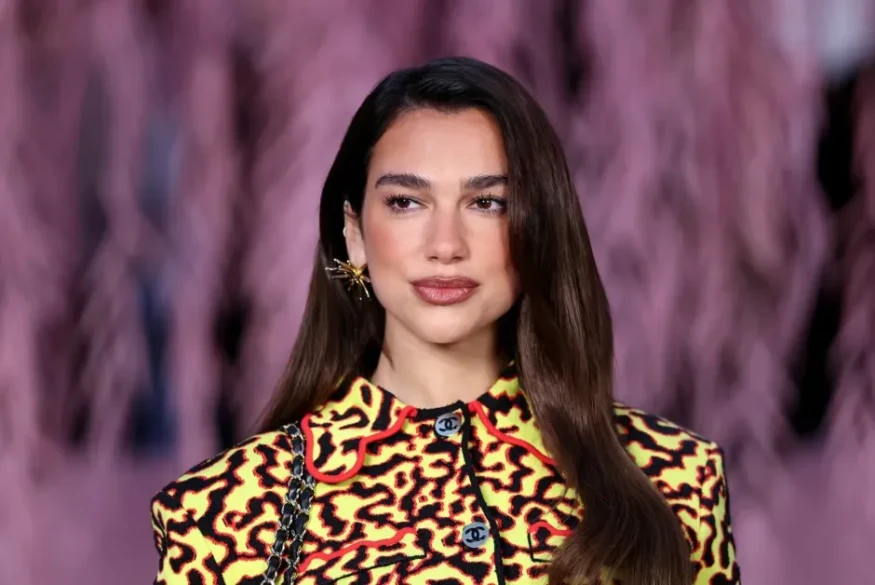
Dua Lipa is entering a creative period in which her personal life and her next musical chapter appear to be meeting in a new way. In a recent interview with Vogue Italia, the 31-year-old singer did not reveal a title, release date or full concept for her fourth album. What she did offer was a more revealing look at the emotional questions currently shaping her songwriting. When she was younger, she said, she often drew inspiration from looking for love and from the heartbreak that followed when relationships failed. Now she is interested in a different problem: what do you write about when you finally find the kind of love you were once searching for?
That shift may sound simple, but it changes the emotional structure available to a songwriter. Heartbreak is naturally dramatic. Rejection, jealousy, betrayal and loss create immediate tension and clear turning points, which is one reason pop music has returned to those subjects for generations. A breakup already contains conflict, consequence and an ending. Stable love is more complicated to turn into a song because it often exists in quieter spaces. Its most meaningful moments can be routines, misunderstandings, private jokes, compromises and small acts of attention that do not arrive with an obvious chorus attached to them.
Those quieter details are exactly what Lipa says she wants to explore. She has spoken about becoming more interested in the complexities of a relationship and in the ordinary experiences that gain meaning when two people begin building a life together. That does not confirm the theme of an entire album, but it offers a clear picture of the questions surrounding her current writing. Instead of returning automatically to the familiar pop language of wanting someone, losing someone or trying to move on, she appears to be considering what comes after the relationship survives the dramatic part.
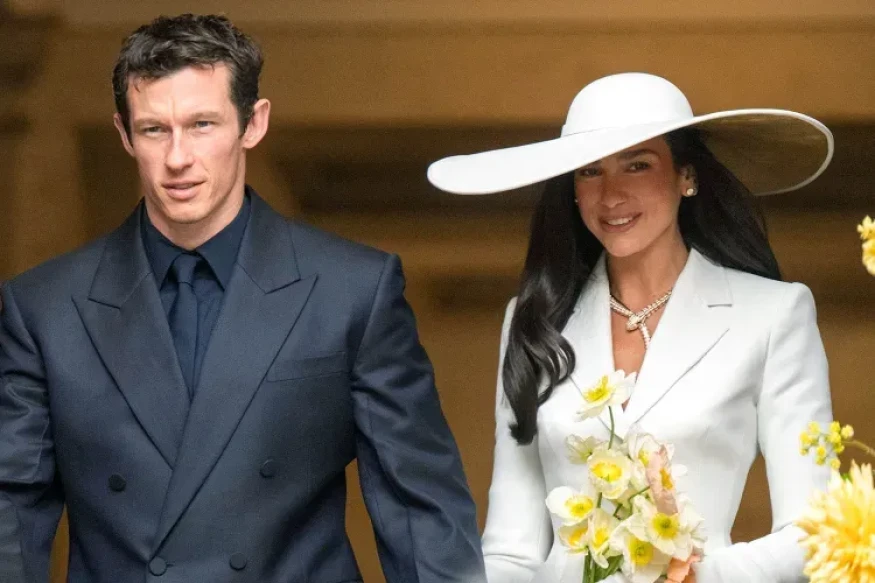
Her marriage to Callum Turner inevitably provides context for that change, although Lipa is not presenting the relationship itself as a ready-made album narrative. The couple held a civil ceremony in London on May 31 before celebrating with a larger gathering in Sicily in June. Speaking about the wedding, she described the day as magical and recalled two pieces of advice they chose to follow. One was to experience the celebration as though they were guests themselves. The other was to keep finding each other in the crowd so the day would not pass without them actually sharing it together.
That story fits naturally with the kind of songwriting she says now interests her. The meaningful detail is not simply the wedding as a major life event. It is the act of looking across a crowded room for one person and making sure a highly produced, public celebration still feels private between the two people at its center. Those are the kinds of observations that become useful when a songwriter moves away from asking how love begins or ends and starts looking more closely at how it is lived.
Lipa has also connected this new outlook to a broader change in the way she approaches perfectionism. During the “Radical Optimism” tour, she began performing a song in the local language of each country she visited, something she has admitted she would probably not have attempted earlier in her career. She now sees some of the more rigid perfectionism of her twenties as something she has been able to loosen, saying that she is increasingly drawn to experiences that feel human and real and has become more forgiving of herself when everything does not go exactly as planned.
For an artist whose public image has often been associated with precision, that development could have creative consequences. Lipa has built major pop eras around strong visual and musical identities. “Future Nostalgia” was defined by a tightly controlled disco-pop universe, while “Radical Optimism” moved toward a warmer and more psychedelic atmosphere without abandoning the sense that each era had been carefully designed. Her next phase may still have that kind of cohesion, but her comments suggest that she is becoming more interested in emotional material that does not arrive in such clean lines.
A long-term relationship naturally contains that kind of uncertainty. Stability does not eliminate tension, insecurity or contradiction. It simply changes their scale. The difficult moments may no longer be dramatic breakups but smaller questions about trust, independence, routine, intimacy and how two people continue to change while remaining together. Those subjects can be harder to turn into immediate pop songs because they rarely offer one obvious villain or one decisive moment of release.
That difficulty may be what attracts her now. Lipa is not describing love as a state in which everything has been solved. She appears more interested in what remains complicated after the initial search is over. That offers a different creative field from the one that shaped many of her earlier songs, where attraction, distance and disappointment often created the emotional momentum.
There is still no indication that the next album will abandon large-scale pop or move into a radically more intimate sound. Lipa has been seen working at Electric Lady Studios in New York in recent months, but she has not announced when the record will be completed or which collaborators will define its final direction. There is also no reason to assume that a more settled personal life will automatically produce a softer or more acoustic project. Emotional perspective can change long before production does.
“Radical Optimism,” released in May 2024, was already concerned with what happens after disappointment and how a person continues without becoming cynical about relationships or life. In that sense, the next phase could begin one step further along. Instead of writing about recovering from disappointment while remaining open to possibility, Lipa now seems to be writing from inside the possibility she previously hoped for.
That creates a different kind of tension. The emotional question is no longer only whether love will arrive or whether it will survive a crisis. It becomes how a relationship changes when it has to exist in ordinary time. Small frustrations, repeated habits and moments of unexpected closeness become more important because they are the material that fills the space between the dramatic milestones.
Lipa’s changing relationship with control appears to support that direction. She has said she is having more fun now that she allows herself to be less rigid and more accepting of unpredictability. Even her approach to social media reflects the same shift. She has acknowledged feeling pressure when she goes several days without posting, but says she is increasingly able to choose the images she likes, publish them and move on without overanalyzing every detail.
That may sound unrelated to songwriting, but the impulse is similar. Both involve trusting a decision without trying to control every possible response. For a pop artist working at Lipa’s level, where music, fashion, social media and public image are all closely watched, that kind of looseness can create room for different choices.
The most interesting part of her current comments is therefore not that she is happy in love or newly married. It is that she has identified a songwriting problem she did not have before. Heartbreak gave her obvious emotional extremes. A stable relationship offers something more subtle and potentially more difficult to describe.
At Electric Lady Studios, that change in perspective is now meeting the practical work of making new music. Lipa has been seen entering and leaving the New York studio without offering a formal announcement about what comes next. For now, the clearest indication is the question she has begun asking herself: after years of writing about desire, searching and disappointment, what happens when the story continues beyond the moment when love is finally found?
Her next album may ultimately answer that question in ways that are still impossible to predict. What is already clear is that Dua Lipa is no longer looking only for the dramatic moment that makes a relationship easy to turn into a song. She is paying closer attention to everything that happens afterward, in the quieter space where love becomes part of everyday life.