Black Sabbath marked the first anniversary of Ozzy Osbourne’s death with three deeply personal tributes shaped by loss, friendship and gratitude. Bill Ward, Geezer Butler and Tony Iommi returned to their final moments together, the emotional Birmingham farewell and the enduring sense that Ozzy remains present through the music, memories and extraordinary legacy they created side by side.
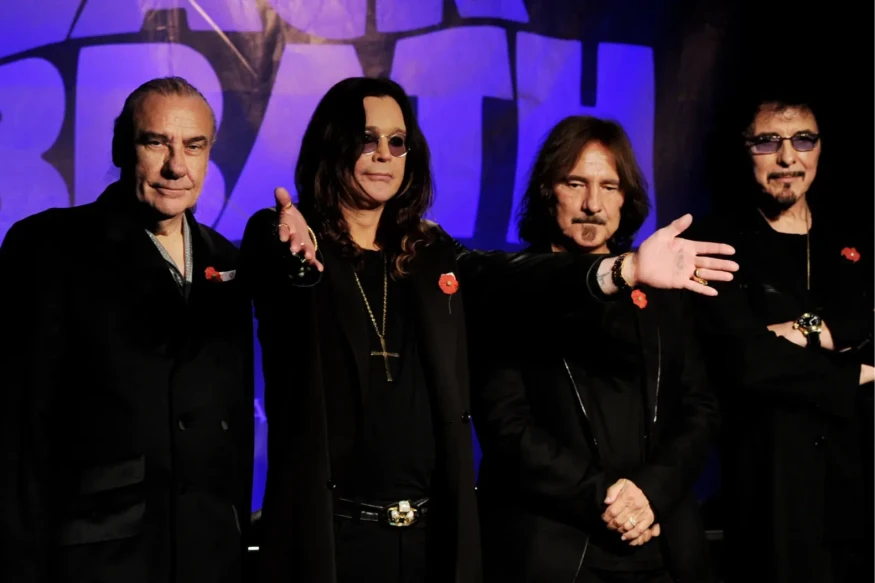
Black Sabbath remembered Ozzy Osbourne exactly one year after his death, not as a distant figure from heavy metal history but as the man with whom they had shared almost an entire lifetime. Bill Ward, Geezer Butler and Tony Iommi each posted separate messages for their former singer and lifelong friend, revealing different sides of the absence they continue to carry. One spoke about the silence that remains every day, another about a legend that refuses to disappear, while the third recalled the conversations they had almost every week. Their words felt less like formal public tributes and more like private notes written through grief.
Bill Ward chose the simplest language. The Black Sabbath drummer described Ozzy’s absence as a “persistent silence” that remains with him each day, adding that both he and his family miss him deeply. The phrase captured something often lost when an artist becomes even more mythologised after death. Behind the record sales, historic concerts, stories of excess and endless discussions of musical influence, there is still the ordinary emptiness left behind in the lives of friends. For Ward, the anniversary did not require a grand account of Ozzy’s achievements. It needed only an acknowledgement that the silence was still there, unchanged from the first day.
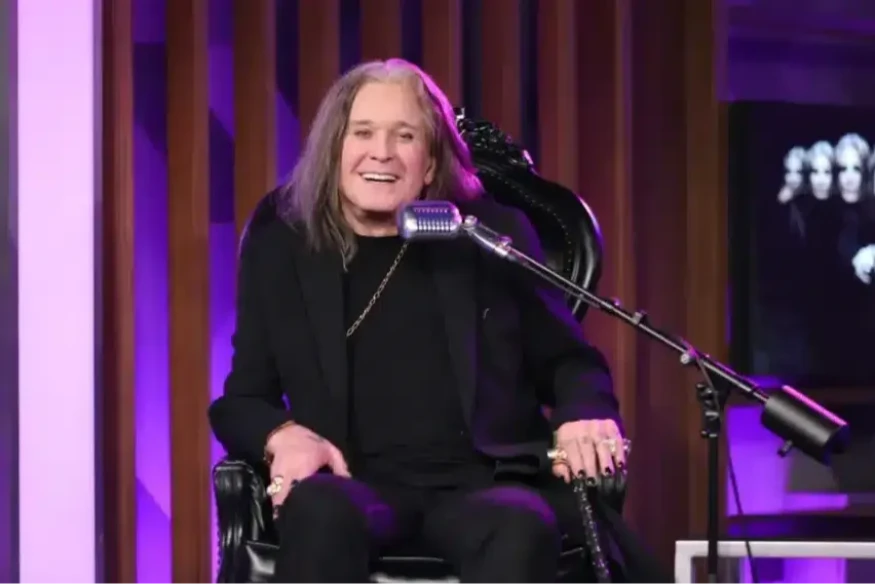
Geezer Butler returned to the final great image of Ozzy Osbourne: seated on his throne in front of an audience that understood it was witnessing something that could never be repeated. In his message, the bassist admitted that he struggled to believe an entire year had passed. He also expressed gratitude that Black Sabbath had managed to perform the farewell concert “Back to the Beginning” in Birmingham only weeks before Ozzy’s death. His words—that the body was gone but the legend remained—carried particular weight because they came from someone who had known Ozzy long before the rest of the world discovered him.
That final concert in Birmingham now exists almost outside ordinary time. Black Sabbath reunited with their original line-up in the city where their sound was born, giving Ozzy a farewell that initially seemed ceremonial but not final. The short distance between that night and his death transformed the concert retrospectively into a last act of reconciliation between the band, their hometown and the audience that had followed them for more than five decades. It was not merely the conclusion of a career. It was a return to the beginning, to the industrial city where four young musicians created a sound that had not yet been given a name.
Tony Iommi wrote in even more personal terms. The guitarist revealed that he still watches old videos of Ozzy on YouTube and, for brief moments, feels as though his friend remains with them. He remembered that they stayed in regular contact, often speaking almost every week, with conversations moving between health problems and the smaller details of everyday life. The image is far removed from the public mythology surrounding Black Sabbath. There are no thrones, dark stages or enormous crowds—only two ageing friends talking about their aches, the latest news and whatever had happened during the week.
The relationship between Tony Iommi and Ozzy Osbourne was one of the most complicated and resilient partnerships in rock history. Black Sabbath lived through breakups, departures, reunions, disagreements and long periods in which their shared past felt both burdensome and unavoidable. Yet the two men remained connected by the music they had created and by a common background that could never be erased. When Iommi wrote that there would never be another Ozzy, the statement did not feel like ceremonial exaggeration. It came from the musician who first heard that voice meet his guitar riffs and help create an entirely new musical language.
Black Sabbath did not simply become one of heavy metal’s most important groups. They established much of the genre’s vocabulary before it possessed a settled identity. Iommi’s guitar, Butler’s bass, Ward’s drums and Ozzy’s voice operated as four equally essential elements of a sound shaped by fear, industrial brutality, social alienation and a world far darker than the dominant rock music of their era. Ozzy’s legacy cannot therefore be reduced to his personality or the extreme stories that followed him throughout his career. It lives in the way his voice gave a human shape to music that could otherwise have felt overwhelmingly heavy and threatening.
The paradox of Ozzy Osbourne was that he could sound frightening and vulnerable at the same time. He did not possess the voice of a technically perfect singer or the image of a polished rock frontman. What he had was a tone capable of carrying fear, confusion, humour and anxiety within a single phrase. That quality gave Black Sabbath’s songs genuine emotional weight beyond their darkness and theatricality. Even when the lyrics addressed war, paranoia or apocalypse, Ozzy’s voice retained something strangely familiar. He never sounded like someone observing the darkness from a safe distance, but like a person trapped inside it.
The first anniversary of his death was also marked by a public message from Kelly Osbourne, who described grief as a force that removes not only the person you loved but also the version of yourself that existed beside them. Her words introduced another dimension to Ozzy’s memory, far from the stage and the history books. For his family, his death was not simply the loss of a global icon. It became a daily confrontation with the absence of a father and husband. The distance between the public legend and private grief remains one of the most painful aspects of every anniversary surrounding a figure of his stature.
“Back to the Beginning” continues to be the shared point to which the band’s memories return. For Geezer Butler, it was the chance for all four members to stand together one final time. For Tony Iommi, it was the moment the original line-up returned to the stage in the city that created them. For the fans, it became a goodbye whose finality they could not yet understand. The concert did not erase the difficult years, the separations or the tensions between the musicians. It simply placed them inside a larger story in which the bond between them proved stronger than everything that had once divided Black Sabbath.
One year later, Bill Ward still hears the silence, Geezer Butler holds on to the image of Ozzy seated on his throne and Tony Iommi returns to videos that make his friend feel present again. Their three different memories meet at the same point: the difficulty of accepting that the man with whom everything began is no longer beside them. As Birmingham continues to honour Ozzy Osbourne and the music of Black Sabbath reaches new generations, his closest friends remain attached to simpler images—a phone call, a joke, a conversation about their health and that final night together in the city where their story started.